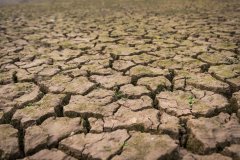
Start of the dry season: Water availability currently sufficient in our region
The dry season has begun. In the northern part of the country, including the Noorderzijlvest Water Authority region, groundwater levels are currently still relatively normal. This is in contrast to large parts of the Netherlands. With drier soil than usual, nature is under pressure, making it even more important to use our available water wisely in the coming period.
A message to garden owners
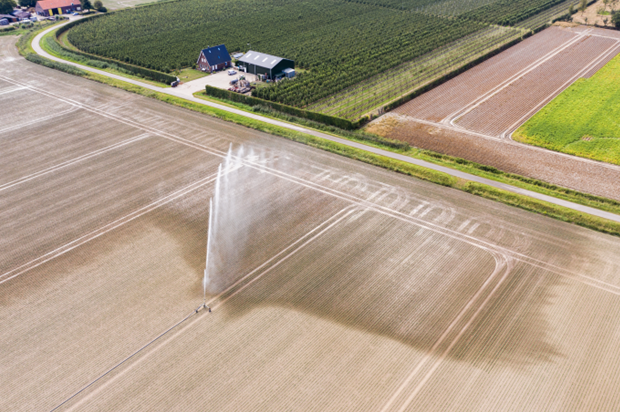
New research* shows that 36% of Dutch people already collect rainwater, usually with a water butt. Another 36% do not yet do so, but are considering it. It is precisely this latter group the water authorities are now urging to take action. The message to garden owners: do in your garden what the water authorities do on a large scale, and retain water more effectively and for longer.
The situation is currently under control, but vigilance remains necessary
In contrast to the southwestern Netherlands, the northern Netherlands received a fairly normal amount of precipitation during the winter. However, the past few months have been slightly drier than average.
The current precipitation deficit in the Noorderzijlvest Water Authority region is still limited at this time. With higher summer water levels, we are retaining more water in ditches and canals, ensuring that water remains more readily available. The supply of additional water is currently limited. Water reserves in the Alps, on which the Netherlands depends to some extent, are lower than normal, but there is currently sufficient water available in our region. An up-to-date overview of the situation in our region can be found in the Water situation, which is updated and published regularly.
Future Droughts
According to climate scenarios of the Royal Netherlands Meteorological Institute (KNMI), droughts will become increasingly common in the future, meaning that water authorities and Rijkswaterstaat will no longer be able to ensure a sufficient water supply everywhere and at all times. This means that everyone—industry, agriculture, government agencies, and residents—must use the available water more sparingly. Meanwhile, the water authorities are working on a large scale to improve the resilience of regional water management. By raising water levels, restoring streams, retaining water longer, and focusing on healthy soils with better water retention capacity.
The Netherlands Takes Action to Collect Rainwater
More than a third of people in the Netherlands already collect rainwater. There is a strong willingness to contribute: 81% consider it important, and 71% are open to taking action themselves. Yet some people don't - often because they don’t know what to do (18%) or don’t have the time or inclination to look into it (20%).
"Research by the Dutch Water Authorities demonstrates that many people are willing to take action, but that there is a need for clear, achievable steps. With our 'Water butts' campaign, we demonstrate how easy it is to collect water in your own garden and make it greener. This creates a more pleasant and healthier living environment, and it reduces the risk of flooding and drought in our region. Every drop counts—and together we can really make a difference," says Roeland van der Schaaf, Dyke Reeve of Noorderzijlvest Water Authority.
Do in your garden what the water authorities do on a large scale
Water authorities are urging homeowners to start using so-called “water butts” themselves. By collecting rainwater and using it later—for example, in the garden—the burden on the sewer system is reduced, and water remains available longer during dry periods. While the waterbutt is by far the most popular option, a wadi is the water collector with the greatest impact: you can collect as much as 100 to 1,000 litres of rainwater in your garden.
Garden expert and water-authority ambassador Lodewijk Hoekstra explains: “A wadi might sound complicated, but it’s actually quite simple. The word ‘wadi’ refers to water drainage through infiltration. A wadi is a sunken area of the garden where water flows to —through a gutter, pipe, or simply on the surface. From there, the water seeps into the ground. A wadi can be a low-lying patch of grass, but it can also be a depression planted with plants that can tolerate water and drought. It looks great and it's good for biodiversity!”
Tips for installing a water butt in the garden
For more tips on installing a water butt in your garden, visit www.watervangers.nl (Dutch only)
* Source: Survey conducted in March 2026 by Blauw Research on behalf of the Dutch Water Authorities, regarding public knowledge and attitudes toward water authorities and water use. This survey was conducted among a representative sample of n=2,000 people in the Netherlands.