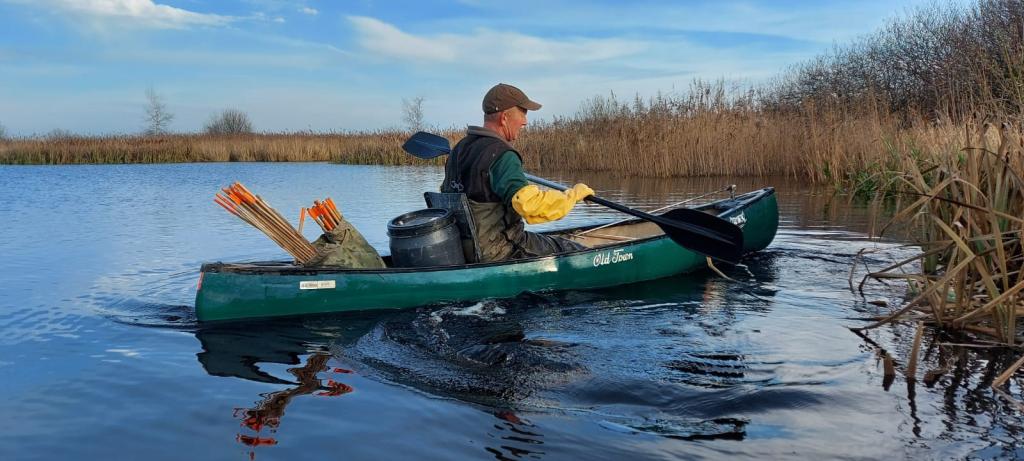
Fewer and fewer muskrats in our area
In 2023, we caught 50% fewer muskrats than in 2022. That is a significant decrease in the number of catches compared to last year. And that is good news, because it means that we are gaining better control over the population. Catches fell from a total of 882 muskrats in 2022 to 441 in 2023. Our goal of ultimately having no muskrats in our area by 2034 is getting closer and closer.
Catching for our safety
We combat muskrats because they damage flood defences and riverbanks by digging burrows and tunnels in dykes. They also build nesting chambers with extensive underground tunnel systems. They can cause subsidence in dykes and flood embankments, which we want to prevent.
We also caught one coypu this year. The control of muskrats and coypus is regulated by law in our country. The aim is to keep the population as small as possible so that damage remains manageable.
| Muskrats | Catches 2023 | Catches 2022 | difference (%) |
|---|---|---|---|
| Noorderzijlvest Water Authority | 441 | 882 | -50% |
| Drents Overijsselse Delta Water Authority | 1.090 | 1.655 | -34% |
| Hunze & Aa’s Water Authority | 3.179 | 2.350 | 35% |
| Vechtstromen Water Authority | 1.599 | 2.063 | -22% |
| Final total | 6.309 | 6.950 | -9% |
| Coypu | Catches 2023 | Catches 2022 | difference (%) |
|---|---|---|---|
| Noorderzijlvest Water Authority | 1 | 0 | 100% |
| Drents Overijsselse Delta Water Authority | 2 | 1 | 100% |
| Hunze & Aa’s Water Authority | 250 | 169 | 48% |
| Vechtstromen Water Authority | 308 | 152 | 103% |
| Final total | 561 | 322 | 74% |
Muskrat management
Water authorities deal with muskrats and coypu. They are not suited to our water system. More information: