Five monitoring buoys installed for the lake Lauwersmeer saltwater monitoring network
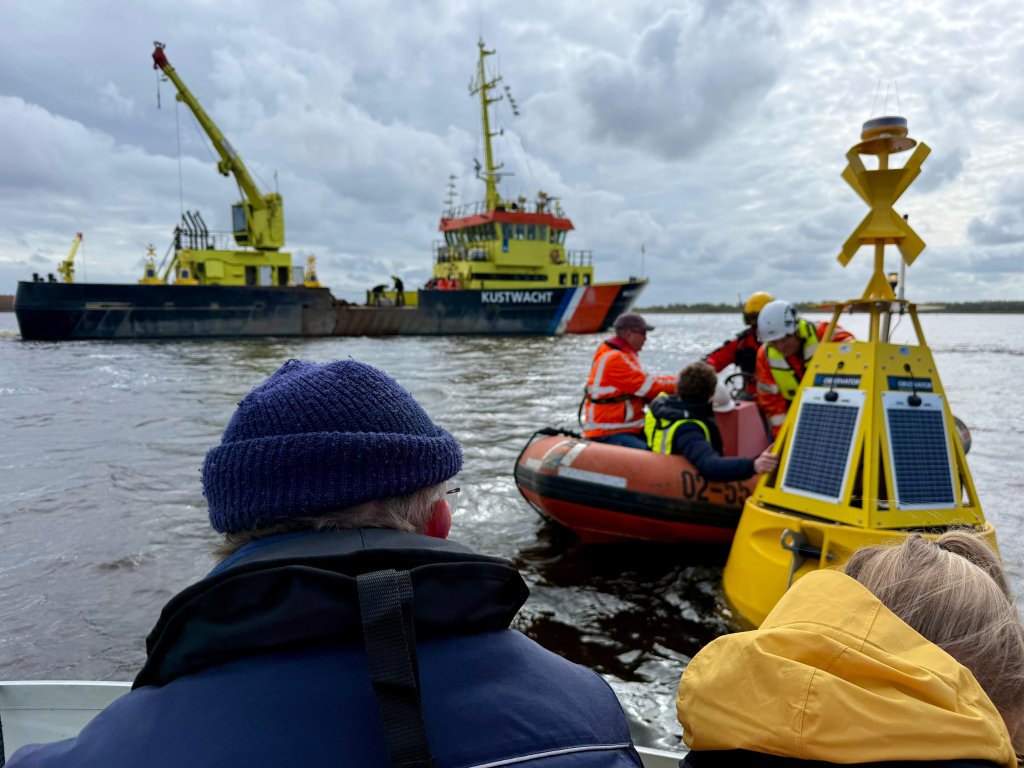
On 20 April, Rijkswaterstaat will install the five monitoring buoys in the open waters of lake Lauwersmeer on behalf of Noorderzijlvest Water Authority. This marks the start of the rollout of a new saltwater monitoring network. Over the coming years, this will provide insights into the transition from freshwater to saltwater between lake Lauwersmeer and the Wadden Sea. The buoys are an important addition to the onshore monitoring points that Noorderzijlvest is currently setting up.
Why are there monitoring buoys in the lake?
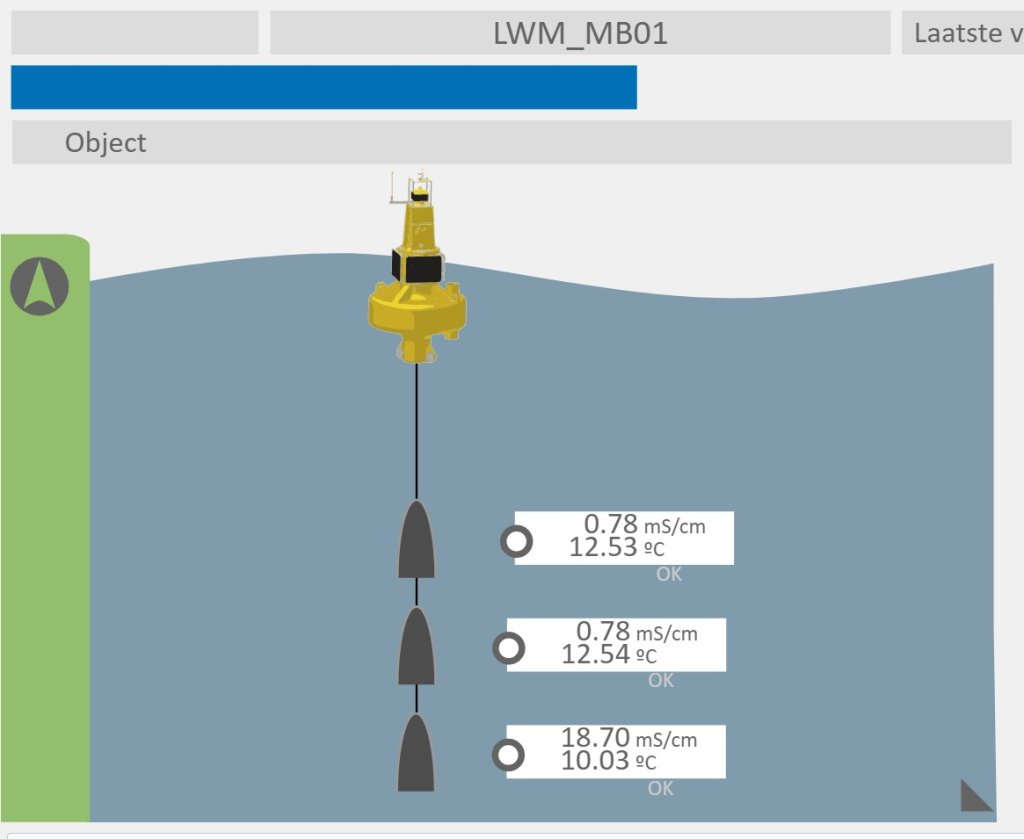
The monitoring buoys continuously record salinity levels at various locations and depths. Combined with the monitoring wells on land, this provides a comprehensive picture of the freshwater-saltwater dynamics in the area. The data show how freshwater and saltwater are distributed throughout the lake and how it responds to water inflow, outflow, and weather conditions. Thanks to the monitoring network, we will soon know where do we have saltware in lake Lauwersmeer and at what depth.
In the current situation, the chloride concentration is measured at a single location for the purposes of the Water Framework Directive—and at a single depth. At that location, the water at the surface may be fresh, while the water at the bottom is salty. Freshwater and saltwater do not mix well; saltwater is heavier and flows underneath freshwater. Therefore, targeted water management can therefore only be carried out with measurement points distributed throughout the entire lake and at multiple depths. This will reveal the effect of management measures and the seasonal variations that emerge.
Preparations are underway, starting with initial measurements at the Clevering locks
In late 2025, Rijkswaterstaat conducted measurements at the R.J. Clevering locks with a survey vessel. Environmental Manager Silvia Mosterd said, “Based on these measurements, we determined the locations of the monitoring buoys in the northern part of the lake. The positioning of the five buoys marks an important milestone.”
This year, we will install additional monitoring points along the lake’s shores and complete the final groundwater monitoring points. In total, this involves approximately 40 new monitoring points, resulting in a comprehensive monitoring network for groundwater, surface water, and saltwater. The entire monitoring network will be operational by the end of 2026.
Open data for everyone
All measurement data will be made publicly available on Noorderzijlvest’s data portal. Mosterd: “We are also developing a user-friendly dashboard. This will allow us, together with local partners, to monitor how the freshwater-saltwater distribution evolves throughout the year and how we can adjust our approach accordingly. The data also serves as input for determining a preferred option for a more natural transition, which enhances ecological water quality and takes account of water safety, water discharge, and freshwater availability.”
Water safety remains a prerequisite
The study on a freshwater-saltwater transition will continue to 2028. Water safety remains the top priority: lake Lauwersmeer remains a crucial link in the drainage of water from Groningen, Friesland, and north Drenthe. Any future measures to improve the connection between lake Lauwersmeer and the Wadden Sea, such as constructing a pumping station, will always be evaluated against this key requirement.
An important step within PAGW
The monitoring network is part of the "Future-Proof lake Lauwersmeer" project, which falls under the Programmatic Approach to Large Water Bodies (PAGW). The goal is to create a gradual, natural transition between freshwater and saltwater in the northern part of the lake, while keeping the southern part fresh for agricultural use. With this approach, regional partners are working toward a more ecologically robust and future-proof Wadden Sea and lake Lauwersmeer.
The monitoring network was recommended by the initiative group of farmers and ecologists. It has been embraced by local authorities in the area. With this project, we are putting that into practice.
The Programmatic Approach to Large Water Bodies (PAGW) (Dutch only) is a joint programme of the Ministry of Infrastructure and Water Management and the Ministry of Agriculture, Fisheries, Food Security, and Nature. The Future-Proof lake Lauwersmeer project is funded by the PAGW.