Collections and objects
Water management has been a human endeavour throughout the centuries. Our predecessors had all kinds of objects for carrying out their work, for board meetings, and for elections. Even back then, people wrote documents about the work that was being done. Some of these objects and archival documents have survived the test of time. Below is an overview of what has been handed down to us.
Collections
Due to its long history, the water authority has an extensive and old archive. The oldest archive document dates from before 1634. The archives contain minutes, maps, images, and more. For insight into the archives, please contact the Groninger Archives (www.groningerarchieven.nl).
Maps
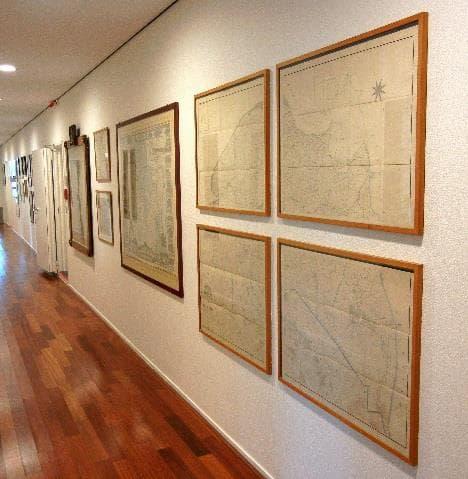
In the past, many maps were made of the constructed waterworks. Maps from the late 19th century show how water management developed.
Wax seal
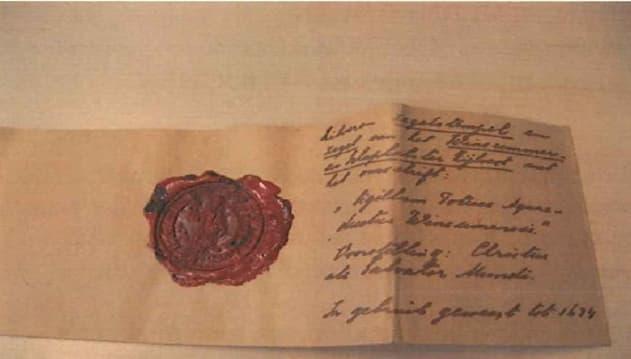
The archives of the Noorderzijlvest Water Authority contain a wax seal, a seal that was used to seal letters, which was used up to 1634. Therefore, the sealed document dates from before that time.
Minutes
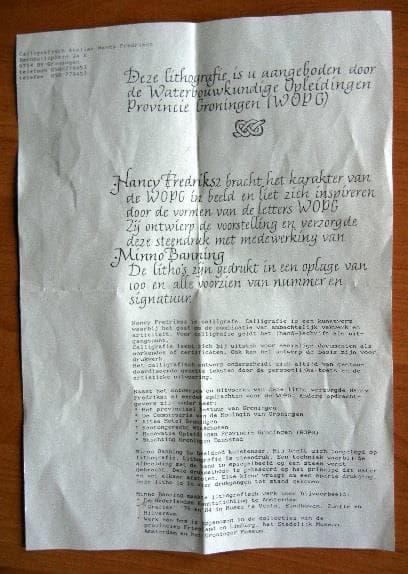
Minutes are taken at water-authority meetings to record what has been decided. This was done in the past, and it is still done today.
Objects
The Noorderzijlvest Water Authority also has objects related to the water authority.
Ballot boxes
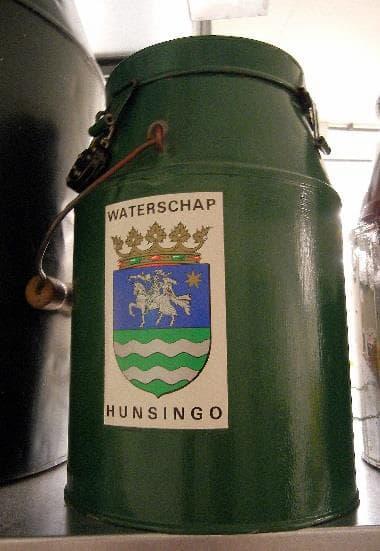
These former churns were used to allow voters to cast their votes. The print on the churns depends on the former water authority.
Messenger badge of office
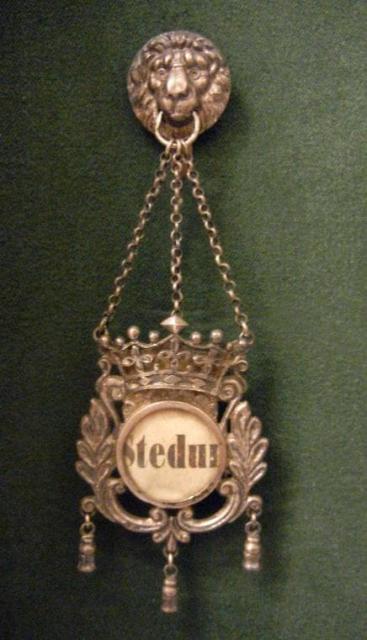
These official messenger badges of office were used by messengers to deliver post. Only government agencies used messenger badges of office, which featured the coat of arms of the agency in question. The oldest Noorderzijlvest messenger sash dates from 1840.
Tools
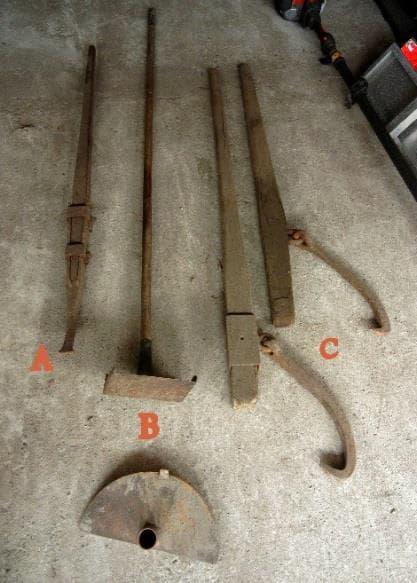
The real work of the water authority happens outside. This requires tools. From the past, the water authority has quite a collection of tools that were used to keep everyone's feet dry.
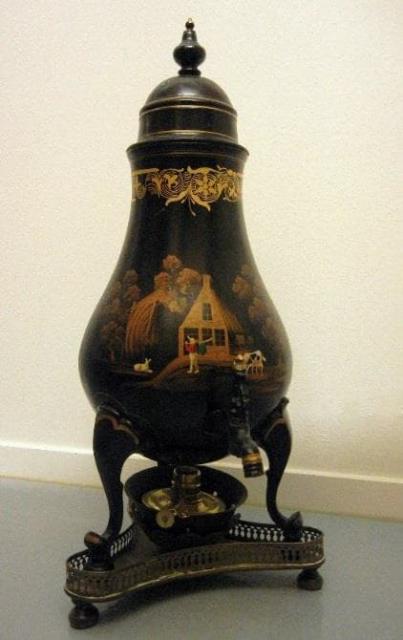
Samovar
These pots were used to brew coffee and then serve it. The brewing process was as follows: the coffee beans were placed at the bottom, topped with water, which was then heated with an oil burner. The mixture was then left to settle, after which the coffee could be poured off.