Sustainable working

Doing our work as sustainably as possible: that is what we want to achieve, and we have already taken many steps in that direction. We also have our ambitions. That is why we have listed our own steps towards sustainable working. After all, water is our most circular raw material.

Climate neutral and circular

We want to be energy neutral by 2025: generating as much sustainable energy as we use. We now generate almost half of our energy ourselves. We do this using solar panels and converting biogas into electricity, among other things. The other half is generated by third parties on land that we own. This involves wind and solar energy.

Climate neutral

The next step is to become climate neutral. We are keeping our eyes on the national goal formulated by the joint water boards: we will be climate neutral by 2035.

You can read what this means for our water authority in the Noorderzijlvest Climate Neutral Roadmap. In this document, Arcadis has mapped out the options available to us for reducing our greenhouse gas emissions. If you would like to receive a copy of this document in its entirety, please contact us. You can find our contact details on the All contact details page.

Circular

Working in a fully circular manner is still something for the future. Agreements have been made about this in the Netherlands. By 2050, the Netherlands must be fully circular. The Noorderzijlvest Water Authority is already taking steps towards a circular future. By recovering raw materials and reusing them. But also, increasingly, by investigating whether (parts of) machines and structures can be reused. 

Circular Noorderzijlvest Roadmap

We have drawn up a roadmap for circular working: Routekaart Circulair Noorderzijlvest (Noorderzijlvest Circular Roadmap). If you would like to receive this document in its entirety, please contact us. You can find our contact details on the All contact details page.

More information: The circular water board

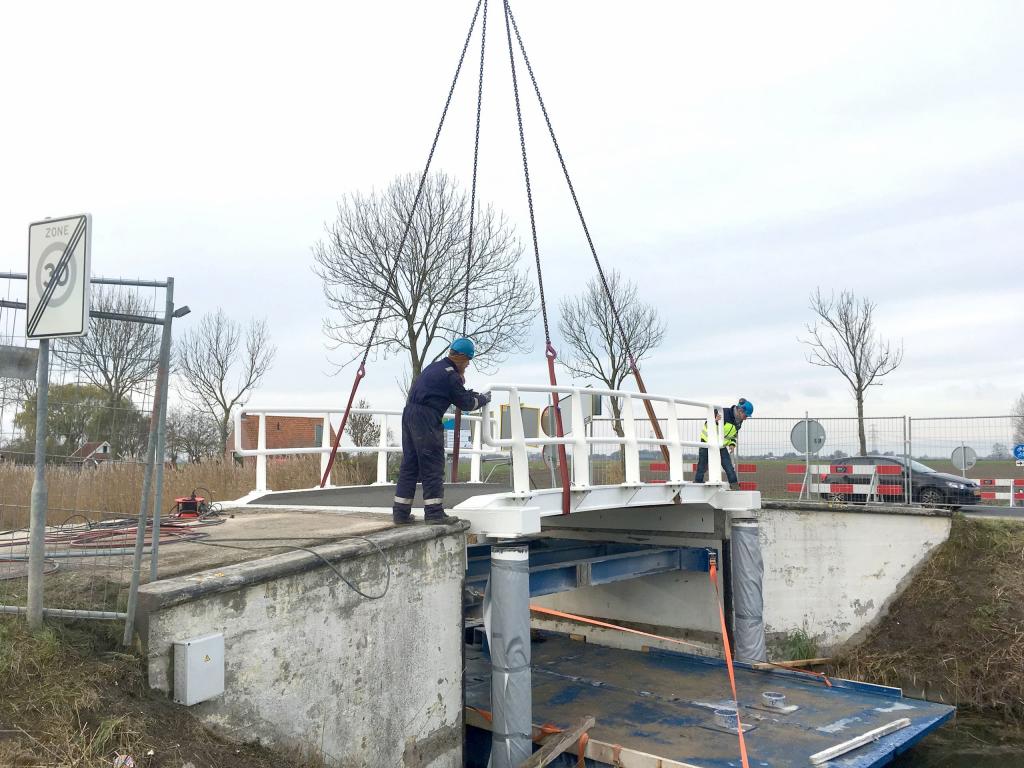
The photo shows a sustainably circularly renovated bridge: Juistertil, Loppersum. Old bridge abutments remain, new bridge hoisted on top.
Sustainable circular renovated bridge: Juistertil in Loppersum

CO2 Performance Ladder

Our water authority works with the CO2 Performance Ladder of the Foundation for Climate-Friendly Procurement & Business (SKAO). 

Sustainable procurement policy

The water authority purchases many goods and services. We also hire contractors for our projects. We do this as sustainably as possible. For example, by rewarding companies that demonstrably work in a more sustainable manner in tenders. 

Our goals

Lower greenhouse gas emissions

The increase in greenhouse gases in the atmosphere causes global warming. We ensure that we emit less and less of these gases by:

  • Limiting energy demand.
  • Generating your own energy.
  • Purchasing green energy that we cannot generate ourselves.
  • Innovating in our wastewater treatment plants (WWTPs)
  • Select materials, additives, and raw materials that contribute to the lowest possible emissions.

This means, among other things, that we:

  • Working with other water authorities to find ways to reduce nitrous oxide and methane emissions from wastewater treatment plants.
  • Generating sustainable energy through solar panels and biogas production.
  • Investigate how we can reduce our energy consumption.
  • Our commitment to preventing peat oxidation. This is a natural process in which peat soil decomposes and CO2 is released.
  • Electrifying our vehicle fleet and focusing on the use of public transport and bicycles.
  • Replacing our diesel pumping stations with electric ones, or running them on HVO diesel.

We are working in a more circular manner

If we do not use raw materials in a circular manner, natural resources will become depleted. We are increasingly working in a circular manner by:

  • Where possible, opt for the reuse of materials and raw materials in our projects.
  • Where possible, work with biobased and renewable materials.
  • To see which raw materials we can recover in our purification process.
  • By offering materials that we no longer use to third parties.

This means, among other things, that we:

  • Providing buildings with a 'materials passport'. This will make it easier to reuse materials in the future.
  • Where possible, use FSC-certified wood instead of steel and plastic.
  • Investigate whether we can recover substances such as cellulose, phosphate, and Kaumera at our treatment plants.
  • Make more frequent use of circular marketplaces where second-hand (construction) materials change hands.

Key points in our approach

We use four key priorities in our daily work to bring our sustainability ambitions closer:

Sustainable Soil, Road, and Water Construction

We apply the environmental indicator, the ambition web, theCO2performance ladder, and/or DuboCalc to realize more sustainable projects. We include the estimated greenhouse gas emissions in all our proposals. We do this for the entire lifespan, not just for the construction phase. 

Circular design principles for new construction, replacement, and maintenance projects

We reuse released materials and raw materials instead of purchasing new materials/raw materials. We first look at our own possibilities and then at the possibilities offered by the market.
We aim to repair if the costs are no more than two-thirds of the replacement costs.
If we have to replace something, we also look at used alternatives first before opting for 'new'.
We are critical of the recycling of plastics and other environmentally harmful substances. We want to contribute as little as possible to the spread of problematic substances.

Less rainwater at treatment plants

We currently treat up to five times more water than the water used by households and businesses at our treatment plants. We are aiming for a ratio of 1:1. In order to reduce the amount of rainwater entering our treatment plants via the sewer system, disconnection is necessary. This requires major investments from our partners in the water chain. In the long term, we will save on new construction and operation of the treatment plants. Costs and revenues are shared between different parties. Agreements are needed in this regard with a view to ultimately reducing social costs.

Awareness and knowledge

We inform our employees and partners about what we do and how it contributes to our sustainability ambitions. Annual updates and figures on progress in key areas raise awareness.

Assessment framework

Not everything can be done at once. We must use our time, capacity, and money wisely. We therefore work with an assessment framework to give opportunities and developments for working more sustainably the right place in our daily work:

  1. We make our operations more sustainable at natural moments: when investing in replacements or new construction, or when tendering for goods and services.
  2. If we do not capitalize on opportunities for sustainability ourselves, we do so together with others or leave it to public or private partners. The choice of what we do ourselves, together, or leave to others depends on the contribution to our goals in relation to costs, returns, and risks.
  3. The order of the "trias energetica" (1. use less, 2. use sustainable energy, 3. be as economical as possible with the fossil fuels we still need) is key to reducing greenhouse gas emissions. 
  4. The cost may precede the benefit: limited additional investments or possible additional costs are possible if significant gains in sustainability are achieved. 
  5. For our energy generation, we consciously choose a mix of biogas, solar, and wind. This increases the likelihood of being able to use our own energy sources throughout the year.
  6. We invest in projects for the generation and/or storage of renewable energy and/or projects for the recovery and/or recycling of raw materials if they can be recouped within their technical lifespan. 
  7. We want to learn from our experiences with sustainability in practice. If we still see major risks, we will start with pilot projects. We share our knowledge with other governments and the market. 

Annual Plan 2025

The 2025 annual plan shows that we want to stay on course with the principles of the water management program.

Sustainability policy framework

All information on this page comes from a broader policy framework. There you can also read more about the background and reasons behind it.

Water management program

We are facing major challenges as the climate changes rapidly. That is why we are working on a water system that is better suited to our region. This system collects excess water and ensures that the area remains dry. And when there is a heatwave, we can use previously stored water for agriculture. We do need to adapt the area for this purpose, however, in collaboration with municipalities and other organizations. 

Regional Energy Strategy (RES)

The Noorderzijlvest Water Authority is participating in the Regional Energy Strategy (RES). This strategy examines how the National Climate Agreement can be translated to our region. What are our ambitions and where is there room for other energy sources, such as solar and wind energy?