Water Framework Directive (WFD) Fish Passages
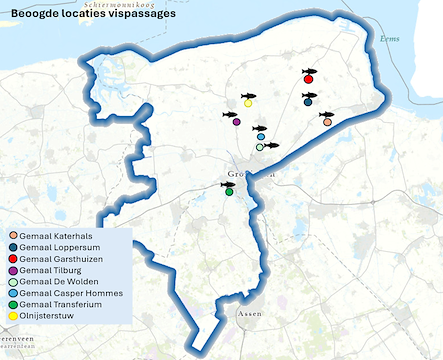
Early 2025, we began addressing several fish migration bottlenecks by constructing new fish passages at eight designated fish migration bottlenecks.
Why do we work on the Water Framework Directive?
The Water Framework Directive (WFD) is a European directive. The purpose of the directive is to protect and improve the quality of surface water and groundwater in Europe. For the purposes of the WFD, Europe is divided into river basins. For each of those, a so-called River Basin Management Plans (RBMPs) is drawn up, setting out chemical and ecological objectives for each body of water and a binding programme of measures. Since the implementation of the Water Framework Directive, the Netherlands has made significant progress in improving water quality.
The importance of fish migration
Fish migrate between different habitats throughout their lives. If they cannot reach those habitats, they cannot survive as individuals, populations, or species. Over time, humans have erected all kinds of migration barriers for fish, such as pumping stations, weirs, and locks, to facilitate other uses of the waterways. Because of these barriers, fish stocks in a number of water bodies in Noorderzijlvest’s management area are not in good condition. The Water Framework Directive aims to improve ecological water quality. The WFD requires European member states to address issues, such as significant barriers to fish migration.
Fish passages contribute to WFD goals
Making migration barriers fish-passable and fish-friendly ensures that fish—as well as aquatic insects—can reach and use their habitats without too much difficulty. Together with addressing the other prerequisites for fish, making the barriers fish-passable and fish-friendly should ensure that the WFD targets for fish populations are achieved.
Why were these eight fish migration bottlenecks designated?
Barriers to fish migration
A balanced and healthy aquatic ecosystem requires a healthy and diverse fish population. A flood defence with pumping stations or weirs act as a barrier, as many fish species migrate between different bodies of water.
Major fish migration routes
There are several hundred weirs, pumping stations, and locks in Noorderzijlvest’s management area. These structures prevent fish from accessing the habitats they need. The presence of these obstacles is one of the reasons why fish population targets have not yet been met in various water bodies. The fish migration plan maps out the most important fish migration routes in Noorderzijlvest’s management area. These routes largely coincide with the main drainage system and the WFD water bodies.
Part of a larger project
These eight bottlenecks, which are being addressed as part of this project, are part of a larger effort. To meet the WFD objective, the Noorderzijlvest Water Authority must still complete the remaining task to resolve fish migration bottlenecks.
What will we do?
Considerations and decisions by location
These eight bottlenecks have been developed into a preliminary design. To make this possible, various considerations and decisions must first be made. Among other things, the analysis examined water level management, the status of the structure, and the functioning of the water system. In addition, an assessment was conducted to determine which fish migration systems are best suited to the selected locations. These considerations have led to preferred solutions for each location.
Preferred solutions
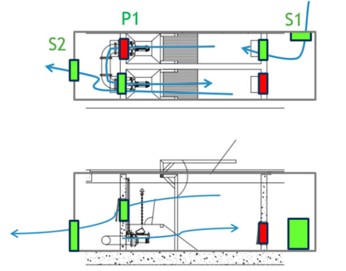
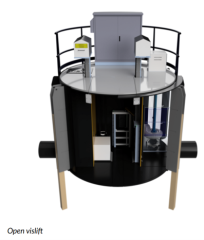
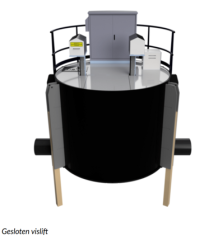
At six locations pumping stations , the preferred solution is a Vislift Up. At the two remaining bottlenecks, a Fish Track and a De Wit passage, respectively, will be installed realised.
What's next?
Detailing the designs
Noorderzijlvest is working with Arcadis and contractor De Boer en De Groot to detail the designs. Based on these designs, the necessary permit applications will be submitted and the preparations for the construction will get underway. De Boer en De Groot will then carry out the work.
Schedule by location
Below is the schedule for the preparation, permitting, and completion of the work at the eight locations.
Tilburg Pumping Station, Vislift-up system (Winsum) | |
| Preparation | Quarters 2 and 3 of 2026 |
| Permit process | Quarter 3 of 2026 |
| Implementation | Quarter 4 of 2026 |
Casper Hommes Pumping Station, Vislift-up system (Zuidwolde) | |
| Preparation | Quarters 2 and 3 of 2026 |
| Permit process | Quarter 3 of 2026 |
| Implementation | Quarter 4 of 2026 |
Garsthuizen Pumping Station, Fish-track system (Garsthuizen) | |
| Preparation | Quarters 3 and 4 of 2026 |
| Permit process | Quarter 4 of 2026 |
| Implementation | Quarters 1 and 2 of 2027 |
Katerhals Pumping Station, Vislift-up system (Appingedam / Hoeksmeer) | |
| Preparation | Quarters 3 and 4 of 2026 |
| Permit process | Quarter 4 of 2026 |
| Implementation | Quarter 1 of 2027 |
Transferium Pumping Station, Vislift-up system (Hoogkerk) | |
| Preparation | Quarters 3 and 4 of 2026 |
| Permit process | Quarter 4 of 2026 |
| Implementation | Quarter 1 of 2027 |
De Wolden Pumping Station, Vislift-up system (Zuidwolde) | |
| Preparation | Quarters 3 and 4 of 2026 |
| Permit process | Quarter 4 of 2026 |
| Implementation | Quarters 1 and 2 of 2027 |
Loppersum Pumping Station, Vislift-up system (Loppersum) | |
| Preparation | Quarters 3 and 4 of 2026 |
| Permit process | Quarter 4 of 2026 |
| Implementation | Quarters 1 and 2 of 2027 |
Olnijster Weir, De Witpassage Type (Onderdendam) | |
| Preparation | Quarters 3 and 4 of 2026 |
| Permit process | Quarter 4 of 2026 |
| Implementation | Quarters 1 and 2 of 2027 |
Grants and contributions
CAP Subsidy
The CAP (Common Agricultural Policy) grant is a European program. CAP grants have been obtained for four of the eight fish migration bottlenecks. The project is therefore co-financed by the European Union. This applies to the following locations: De Wolden Pumping Station, Casper Hommes Pumping Station, Garsthuizen Pumping Station, and Katerhals Pumping Station. CAP grants are intended for agricultural entrepreneurs, nature and landscape organizations, research institutions, government agencies, and partnerships, and support the following activities, among others:
- Enhancing nature, the landscape, and biodiversity
- Improving animal welfare
- Integrated area-specific approach to the environment, climate, biodiversity, and water
- Improving water quality
Subsidence Committee
Within these eight fish migration bottlenecks are several pumping stations and weirs. These were constructed to mitigate the effects of subsidence caused by gas extraction on the water system and water level management. Because these facilities were funded at the time by the Land Subsidence Commission, the commission is now also contributing to the costs of resolving fish migration bottlenecks.