Mowing watercourses
Ditches, creeks, streams, and canals serve an important function. They retain water and transport it to and from other areas. To prevent watercourses becoming overgrown, we mow the banks, slopes, and riverbeds.
Why do we mow?
Every year, we mow along and in watercourses to make sure there is enough space in watercourses to supply water when there is a shortage. Water that is of sufficient quality to irrigate crops. There also has to be enough space to drain excess water when there is a lot of rainfall.
We mow to prevent flooding and drought. And to keep the water clean and healthy. For example, we don't mow everything away. We want to give nature space too. The more different plants and animal species there are near and in the water, the cleaner the water becomes.
How do we mow?
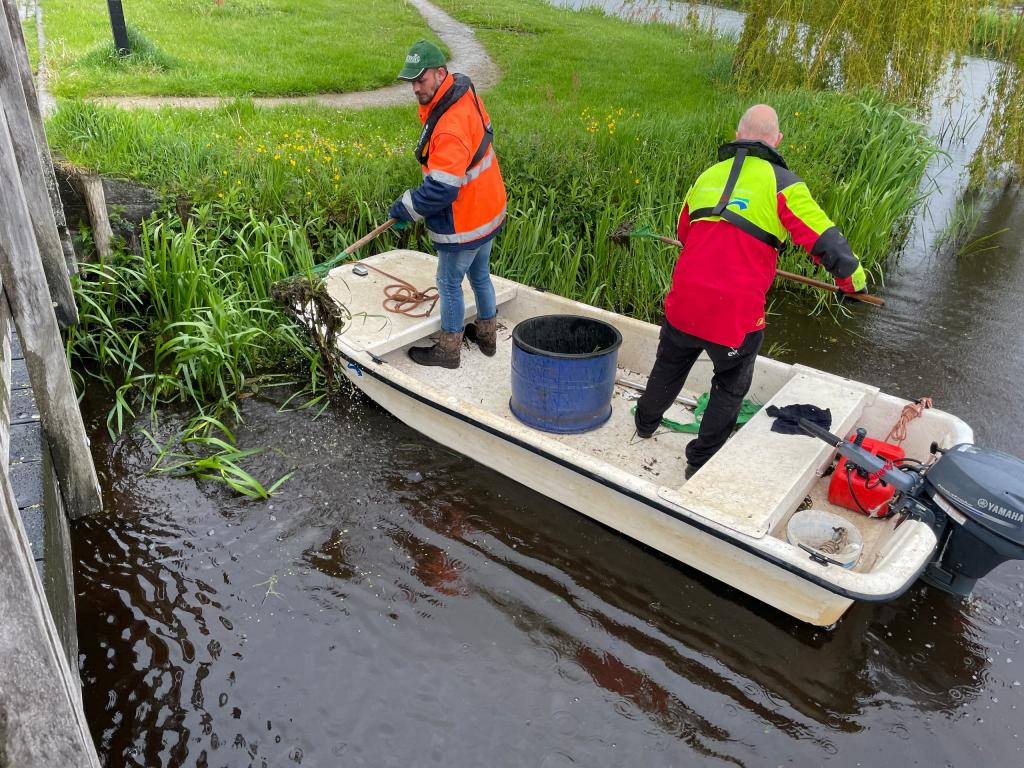
We mow approximately 2,500 kilometres of watercourses. For each watercourse, we have determined what we mow and how many times a year. We mow with tractors with mowers, mowing rakes, and cranes with mowing baskets or mowing boats.
We mow along watercourses so we can see what we are doing when we remove aquatic plants from the watercourse. This allows our people to work safely.
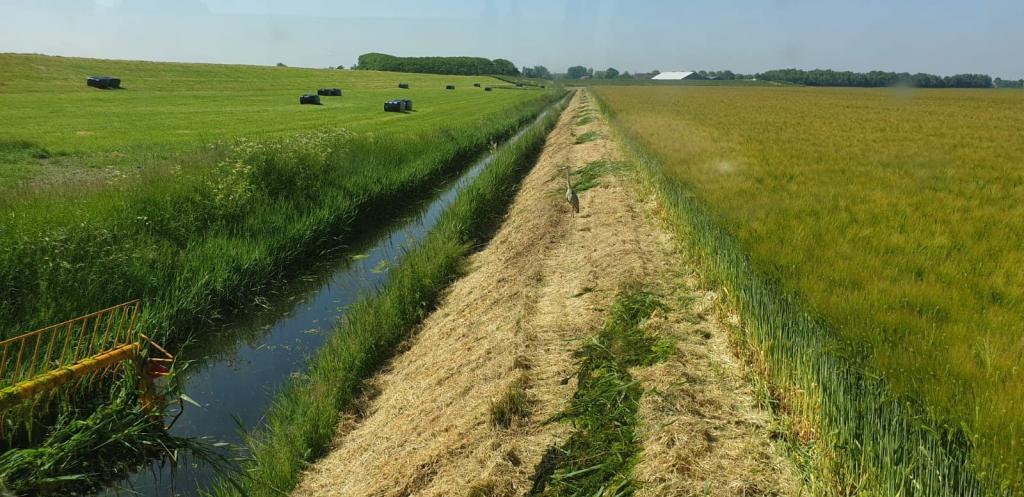
If we can we see what we're doing, we will not mow the slopes first. If we cannot see properly, we will mow the slope on one side.
Sometimes a watercourse is really narrow. We need to be able to access it properly to ensure that the watercourse does not become overgrown. In that case, we mow both sides. In many cases, we can leave reeds standing on one side each mowing season. This promotes the living environment for plants and animals in and along the water.
Code of Conduct Flora and Fauna Act for Water Authorities
As of 1 April 2025, the water authorities in the Netherlands will have a code of conduct for flora and fauna again. This code of conduct contains agreements for managing and maintaining ditches, canals, and other watercourses. The aim of the agreements in the code of conduct is for work to be carried out with as little damage to plants and animals as possible.
Read more about the code of conduct at: https://www.noorderzijlvest.nl/nieuwe-gedragscode-flora-en-fauna-voor-beheer-en-onderhoud-waterschappen?
Eradicating exotic species
Floating pennywort is an exotic species that causes watercourses to become overgrown quickly. In our region, it is particularly prevalent in the Westerkwartier. Our aim is to prevent this exotic species from spreading further.
We started this in April 2021.
More information about controlling exotic species: Controlling exotic species