
Runsloot pilot project
An important part of the plan is a pilot project in the Runsloot. We are testing natural measures at various pilot sites. For example, narrowing the stream and reducing mowing.
- When measures are chosen, we pay close attention to the environment. The measures must not cause problems for farmers, residents, adjacent plots, or homes.
- With this pilot, we want to learn about the effects on the water level in the Runsloot, the groundwater levels of the adjacent plots, the flow, the fish population, and the plant growth. That is why we are installing measuring points at various sites. This will allow us to monitor any changes.
- We are taking small measures in and around the stream. This is expected to create more space for nature. It will also increase the variation in flow and soil. We expect this to be beneficial to water quality and biodiversity.
The pilot project will start in early 2026.
Three pilot sites in Runsloot
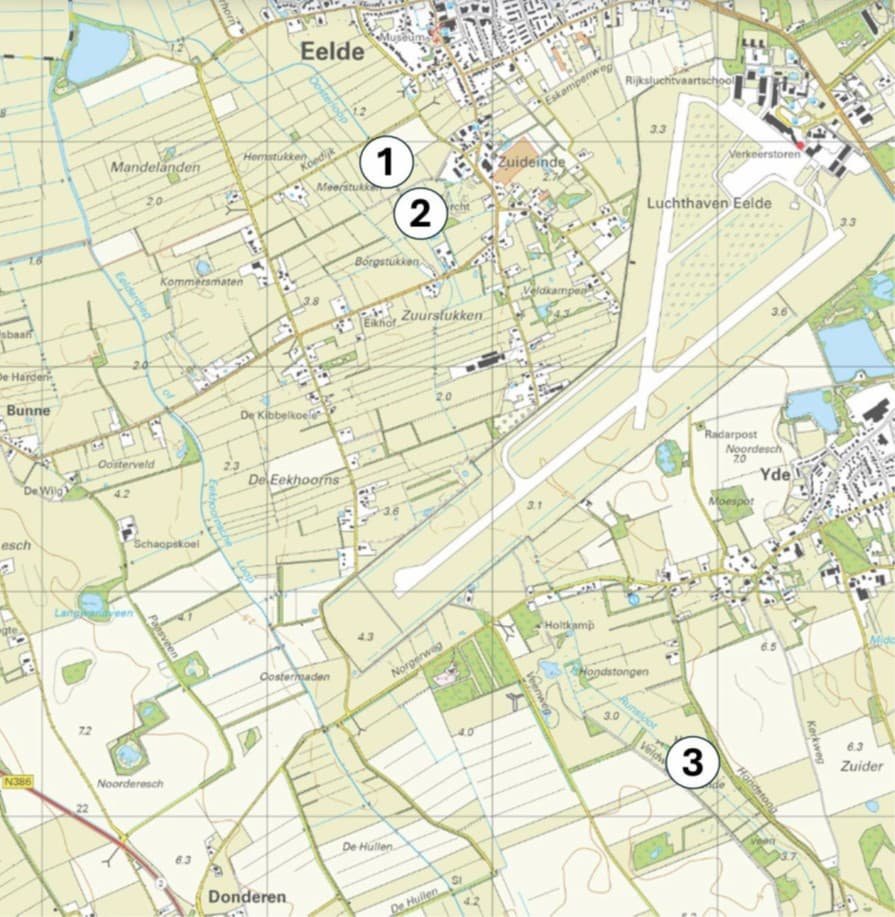
We are testing measures at three different pilot sites on the Koedijk and Veldweg. Each pilot site consists of three pilot sections, where we try out different measures:
- Nothing is done in the first pilot section; this is the zero situation so that the different options can be compared properly.
- In the second pilot section, the stream is narrowed by using a row of posts.
- In the third pilot section, only part of the stream is mowed (Customised Maintenance).
Below you can see the pilot sites.
Explanation of pilot measures
Stream narrowing by using posts
At the various pilot sites, the stream bed is narrowed in the second section with a row of posts. There will be open and closed rows of posts, depending on the pilot site. This will allow us to test what works best. By putting them halfway through the existing watercourse for example, the profile of the stream bed changes. The water is no longer discharged in a straight line, but meanders, creating more variation in flow and bed.
There are several openings in the rows of posts, and fish can swim through them. A quiet zone is created behind the posts. Plants are allowed to grow here naturally. This part will not be mowed for the time being. Only the other side of the stream will be maintained. If nothing happens for years, a permanent bank may form and that is not the intention. After a year, we will assess whether maintenance is needed or whether it can remain as it is.
Stream mowing (Customised Maintenance)
At the various test sites, the effects of stream narrowing are intented to be achieved in the third section by using poles, but without making any changes to the stream. Only one side of the stream is mowed. The plants on the bank remain standing. This is called passive development.
Because only one side is mowed, the other side becomes overgrown with bank plants. This causes the stream to narrow. Maintenance is carried out in the same way as in section 2: only one side is mowed. After a year, we will assess whether this is working well or whether adjustments need to be made. This prevents the stream from becoming completely overgrown or trees from growing.
Why do we use pilot sections?
The measures that are implemented cannot have negative effects on water safety, homes, land use, or the groundwater level of surrounding agricultural land. With this pilot, we are testing the impact on water levels, currents, fish stocks, and plant growth in practice. That is why we are installing measuring points and working with different pilot sections, including a control section without any interventions. This allows us to gather valuable information for the final measures.
What happens to the findings?
The pilot period will last approximately one year. If the pilot period yields favourable results, we may also implement these measures in other sections of the Runsloot and Stroetenloop.
More information about Infographic
An infographic presents information and data by using images and text. Illustrations, charts, and icons help make complex topics clear and easy to understand.
Read more about the pilot project: Runsloot Pilot Project Infographic (Dutch only).pdf
Questions?
What measures are involved in the Runsloot-Stroetenloop project? When will work commence, and what will be the outcome? Read the answers to frequently asked questions about Runsloot-Stroetenloop.