Future of stream valleys
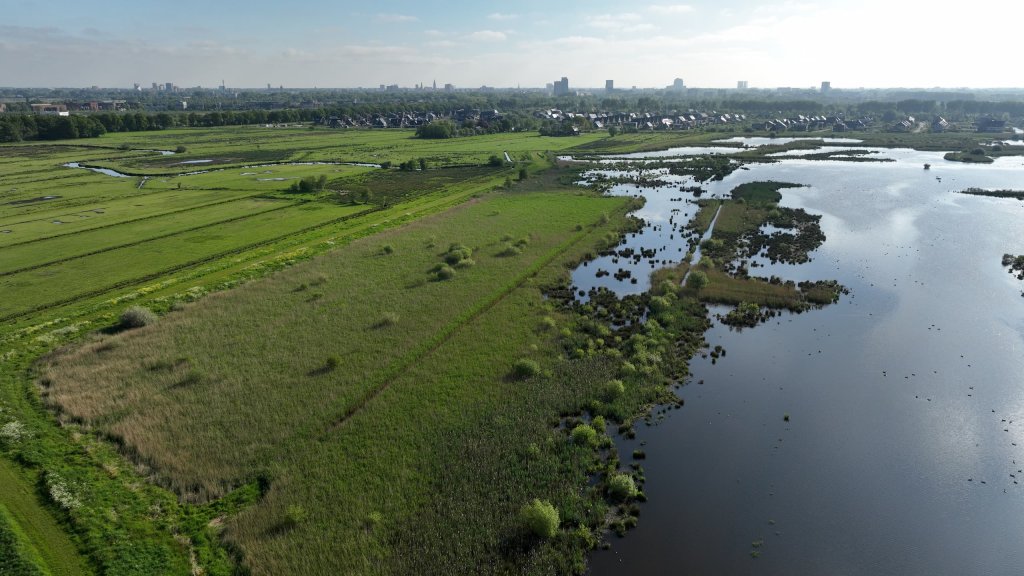
Northwest Drenthe has beautiful landscapes. From the Fochteloërveen to the Onlanden, you can see high moorland, stream valleys, and marshlands. Water plays an important role. To ensure that everything works properly, restoration measures are taken and stream valleys are redesigned.
How do we do that?
There will be more space for water in the stream valleys. The water system will be slowed down so that water has more time to seep into the ground and flows more slowly. Where possible, small watercourses will be made shallower and narrower. We are exploring the possibility of higher groundwater levels. This will ensure that Groningen remains dry and that more water is available in the Kop van Drenthe.
Eelder and Peizerdiep
The area-specific approach focuses on restoring the stream valleys of the Eelder and Peizerdiep. Streams in the Peizer and Eelderdiep system flow from the Drents Plateau to the north. Important questions include: how can we slow down the flow of water, retain water in this area for longer, and enhance biodiversity?
Redesign of stream valley and optimisation of De Onlanden
The redesign of the stream valley is linked to the optimisation of De Onlanden. This is where balancing lakes will be expanded in response to climate change. In October 2021, it was agreed in the Onlanden administrative consultation that this expansion of balancing lakes will be accompanied by measures for the upstream catchment.
Enough water for agriculture, nature, recreation, and housing
If water can be retained longer in the upstream stream valleys, there will be less pressure on the natural values in De Onlanden. With the combined approach in and around the Eelder and Peizerdiep and the optimisation of De Onlanden, we are working together to contribute to a robust and climate-proof water system and the availability of enough water for agriculture, nature, recreation, and housing.