Freshwater and saltwater
How can we achieve a better transition from freshwater to saltwater in the northern part of the lake while the southern part remains fresh for agriculture.
Former Lauwers Sea
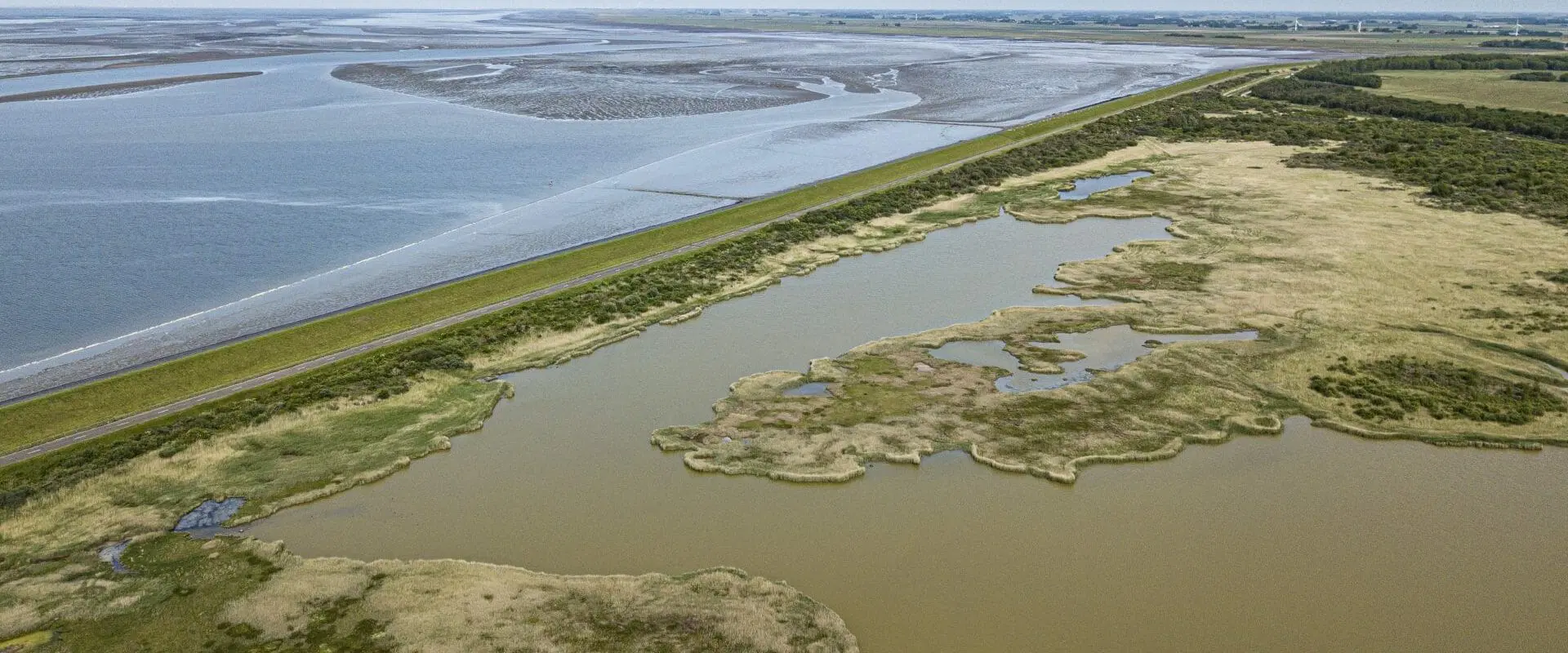
The Lauwersmeer now has freshwater. But it was once the Lauwers sea, where freshwater and saltwater flowed into each other. At the end of the 1960s, lake Lauwersmeer was closed off from the Wadden Sea to prevent flooding. Since then, the water has been fresh, thanks to the supply from rivers in Friesland, Groningen, and Drenthe. We now keep the water from the sea out with a dyke and locks.
Nature interests
It is better for nature if there is a more natural transition zone between freshwater and saltwater in lake Lauwersmeer and the Wadden Sea. This creates more variety in environments (salt, brackish, and fresh), which increases the biodiversity of fish, aquatic animals, birds, and plants.
Focusing on nature and water quality
The basis for nature restoration in the lake Lauwersmeer area and the Wadden Sea is the Natura 2000 status and the European Water Framework Directive. The lake Lauwersmeer area, covering almost 6,000 hectares, was designated as a Bird Directive area within Natura 2000 in 2003. The area is important for the objectives of the Wadden Sea (birds and fish) and the connection with other Natura 2000 areas (otters and fish).
In accordance with the Water Framework Directive, all water in the Netherlands must be a good habitat for native plants and animals by 2027. That is why we want to ensure that migratory fish can once again reach the places they naturally want to migrate to. Lake Lauwersmeer is an important link for fish migration between the sea and the streams of Groningen, Drenthe, and Friesland.
Future for agriculture
In addition, it is important that space remains available for farmers in the lake Lauwersmeer area. They depend on the supply of freshwater, for example for their livestock and for growing seed potatoes. Farmland is mainly located in the southern part of the lake Lauwersmeer area.
Room for freshwater and saltwater
Therefore, the Future Agenda for Lake Lauwersmeer.pdf (Dutch only) states that the northern part of the lake will become brackish, so that we can restore the original nature there, while the southern part will remain fresh for agriculture.