Joint effort by Groningen and north Drenthe for a climate-adaptive region
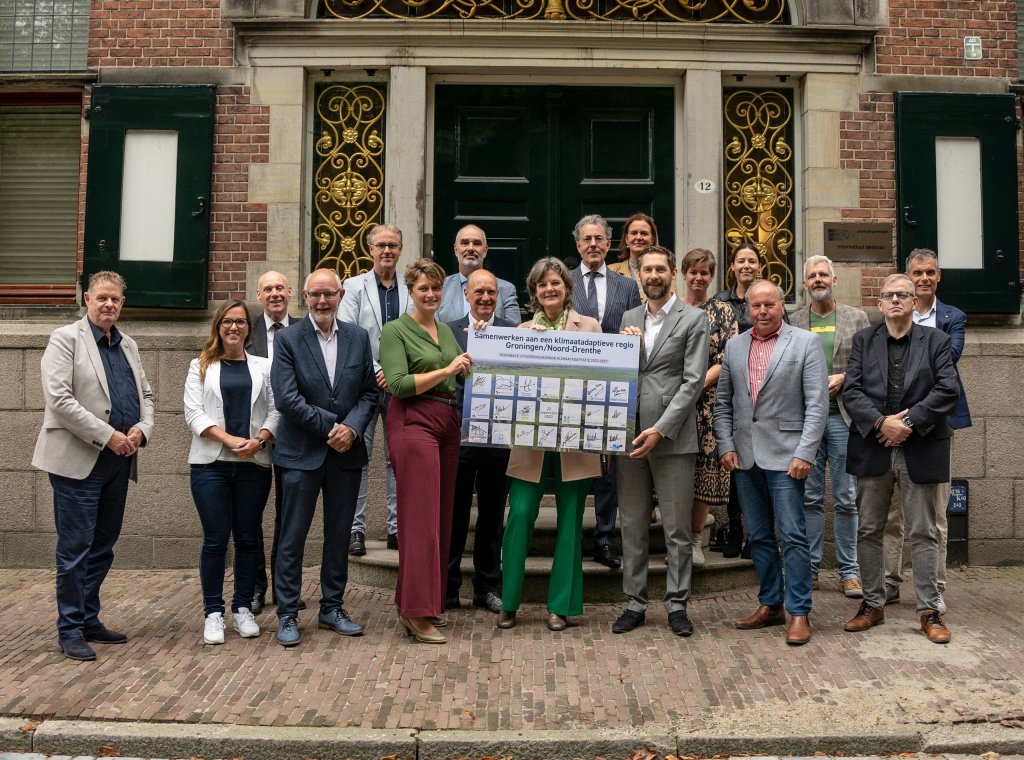
In the coming years, the Groningen/North Drenthe region will join forces to combat the effects of climate change. This is outlined in the Regional Climate Adaptation Implementation Agenda, which all regional partners signed during an administrative meeting on September 22. With this, they have agreed to work together between 2023 and 2027 to create a climate-resilient region. And to implement concrete measures that contribute to this goal.
Various themes
The collaboration covers various topics. One of these is the creation of water buffers and green belts in the region to capture excess rainwater. The partners are also working together to raise awareness of climate adaptation among residents and businesses. In addition, they are assessing the impact of extreme weather conditions on vital and vulnerable functions in the region, with measures to reduce the risk of disruption. These include functions such as energy supplies, critical infrastructure, and hospitals.
A climate-resilient region by 2050
The Regional Implementation Agenda is a detailed plan based on the Regional Climate Adaptation Strategy, which the working region adopted in March 2022. With this strategy, the partners aim to jointly address the risks and impacts of climate change.
Kirsten Ipema, vice-chair of the steering committee, views the implementation agenda as an important joint step: “In the implementation agenda, we have translated the strategy into concrete joint measures. Collaboration is essential to achieving the goal: a climate-resilient and water-robust region by 2050.”
Collaboration
The Groningen/North Drenthe working region consists of 22 partner organizations: the ten councils in Groningen, four councils in Drenthe councils (Tynaarlo, Aa en Hunze, Assen, Noordenveld), the provinces of Groningen and Drenthe, the Noorderzijlvest and Hunze en Aa’s water boards, the Groningen and Drenthe Safety Regions, and the water utilities of both provinces. The working region was established to collaborate more efficiently on climate adaptation, learn from each other’s approaches, and ensure effective coordination among organizations working to improve the quality of the living environment.