How we collaborate
At Noorderzijlvest Water Authority, we enjoy working together. We understand that working alone sometimes yields faster results, but given the many major challenges facing our region, we have no choice but to work together.
Under the heading of how we collaborate, we would like to tell you more about the area processes to which we contribute with many partners, about projects we carry out together with organisation, and how we collaborate internationally.
Lake Paterswoldsemeer
In recent years, the Noorderzijlvest Water Authority has taken various measures to improve water quality. The goal: clean water, a wide variety of plants and animals, low levels of blue-green algae, and manageable aquatic plant growth. The drainage route to Hoendiep has also been addressed.
With 13 nature-friendly banks and zones, seven fish hotels, and four fish forests, lake Paterswoldsemeer now looks very different. These measures will improve water quality and health over time.
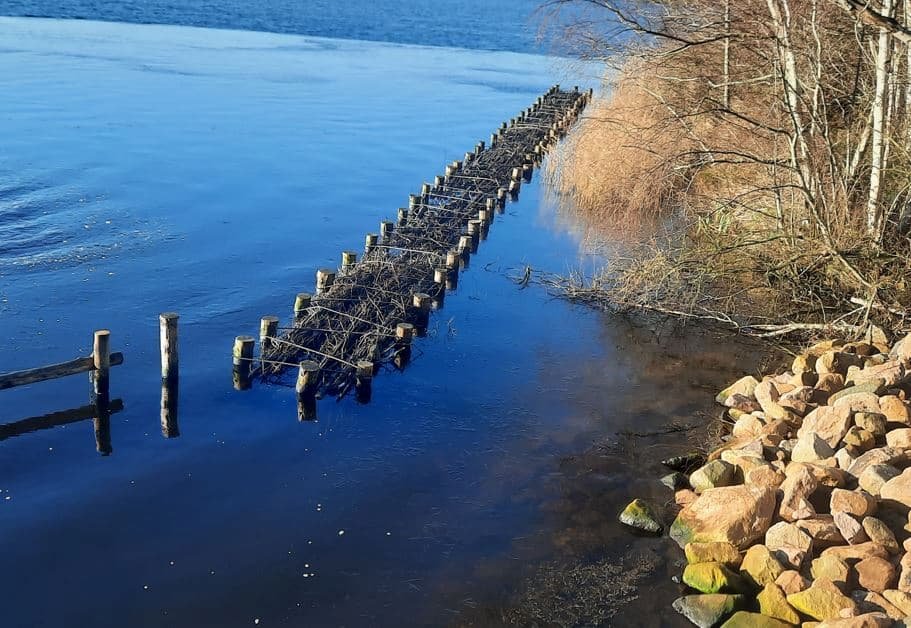
The work on lake Paterswoldsemeer has been completed. The measures to improve water quality, which were implemented in 2024, were devised in collaboration with residents, users, Meerschap Paterswolde, Natuurmonumenten, and Sportvisserij Groningen Drenthe. The municipality of Groningen was an important partner in the project to improve the main watercourses between lake Paterswoldsemeer and Hoendiep. Elze Reitsema, executive director at Noorderzijlvest watrer authority: "Improving water quality is a major social task for the water authority. We do this on the basis of the Water Framework Directive and in close cooperation with the local community. Thanks to our mutual trust and confidence in the plan we have drawn up, we have now reached a major milestone in terms of clean and safe water. For everyone who lives, works, or recreates in this area. Ultimately, water connects us all."
We will officially complete the project in early 2025. In the coming years, we will closely monitor the effect of the measures on water quality. A detailed monitoring plan has been drawn up for this purpose. In the coming years, we will also continue the aquatic plant inspection and mapping, which has been carried out since 2021. Monitoring results will be shared on the Meerschap website from 2025 onwards. The Meerschap will also manage and maintain the nature-friendly banks, fish forests, and fish hotels. The relevant agreements have been concluded, and the Meerschap and the water authority will meet 2-4 times a year to coordinate.
Area development Zuidelijk Westerkwartier
In the Zuidelijk Westerkwartier, we are participating in the area development of the region, which combines nature development with the creation of balancing lakes. It is a project in which the water authority works together with other parties such as the Province of Groningen, the Municipality of Westerkwartier, Prolander, Het Groninger Landschap, LTO Noord, Collectief Groningen West, Staatsbosbeheer, Wetterskip Fryslan, and Westerkwartier Hart van het Noorden.
Dwarsdiep Water Level Regulation Plan
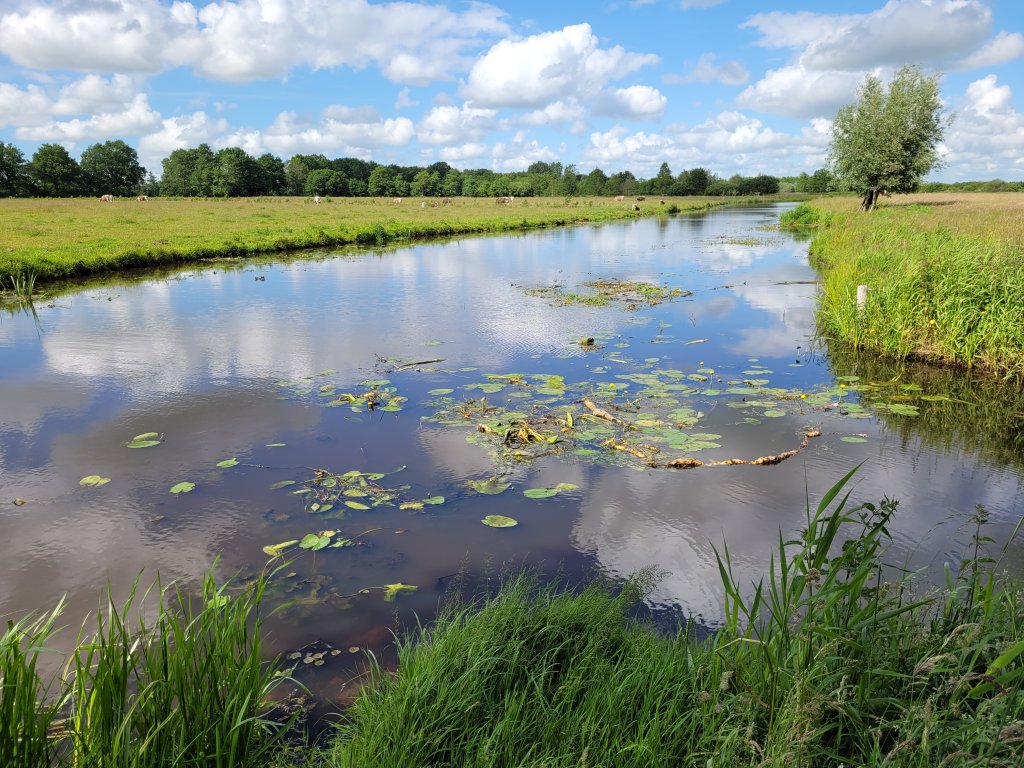
In 2024, the Water Authority made a draft Dwarsdiep Water Level Regulation Plan available for inspection. During several walk-in meetings, it was possible to ask questions about the adjustments needed to achieve an appropriate water level in the area. The walk-in evening was well attended, with around fifty interested parties. After receiving the submitted opinions, the water authority worked on a final Water Level Regulation Plan. The Water Level Regulation Plan is required to improve water quality and water safety in the Dwarsdiep area. In June 2024, the Dwarsdiep Water Level Regulation Plan was formally adopted by the Noorderzijlvest Water Authority.
Of course, there was more to such a large area process. What? You can read about it on the website of the Zuidelijk Westerkwartier - Zuidelijk Westerkwartier area process.
New Waterworks Zoutkamp
New Waterworks Zoutkamp is the project name for the work carried out in Zoutkamp and the surrounding area. The work is carried out in collaboration with the Noorderzijlvest Water Authority, the provincial executive of Groningen, and the municipality of Het Hogeland.
The project was prompted by the 'Droge Voeten 2050' (Dry Feet 2050) study. This study was conducted to chart the consequences of climate change and subsidence. It showed that the H.D. Louwes pumping station needs to be enlarged and that regional flood defences at Zoutkamp need to be reinforced and raised.
As water authority we are responsible for building a new pumping station next to the Hunsingo lock, a national monument. We are restoring the Hunsingo lock and converting it into lock, constructing bank protection measures, and the old sea dyke will regain its function as flood defence. In addition, work will be carried out in the future to demolish the existing H.D. Louwes pumping station.
For the Zoutkamp project, 2024 was a great year with some impressive milestones:
The lock is being restored and converted into lock. This involves a lot of work.
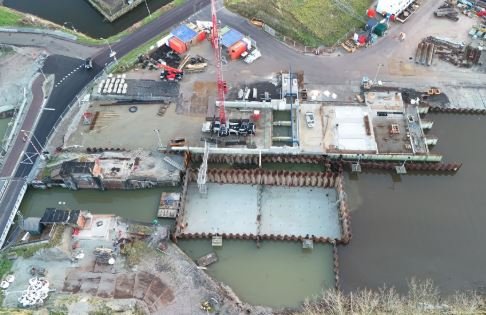
As a sneak peek, we are showing the concrete work of the cellars of the existing Hunsingo lock. This is where we will install the hydraulic cylinders to operate the wooden doors later this year. A 2.0 version that is, because the original doors are unfortunately too rotten to be reused. This does not apply to the steel parts from the original doors. Where possible, these will be reused in the new version.
What a wonderful milestone in Zoutkamp! The flow pipes of the new pumping station are filled with water:
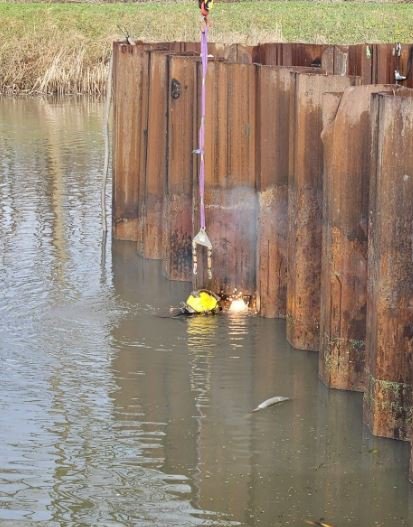
After a diver burned holes in the sheet piling of the construction pit, the water flowed gently into the pit. You can see it in the photo below:
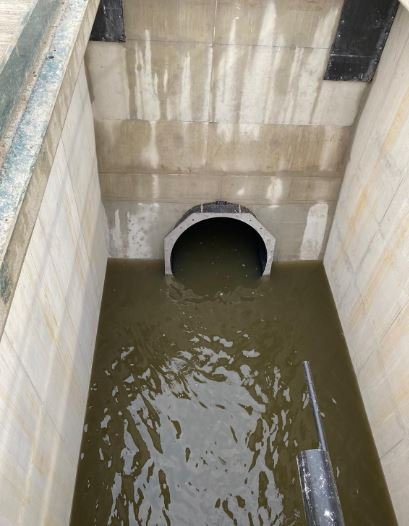
The video below shows you what the pumping station looked like before it was filled with water:
Kop van Drenthe
In the Kop van Drenthe, the area stretching from Fochteloërveen to De Onlanden, various partners are working together to make the rural area climate-proof. Due to climate change, we are increasingly faced with heavy, prolonged rainfall and periods of drought in the area. This causes problems, but also offers opportunities for agriculture and nature development.
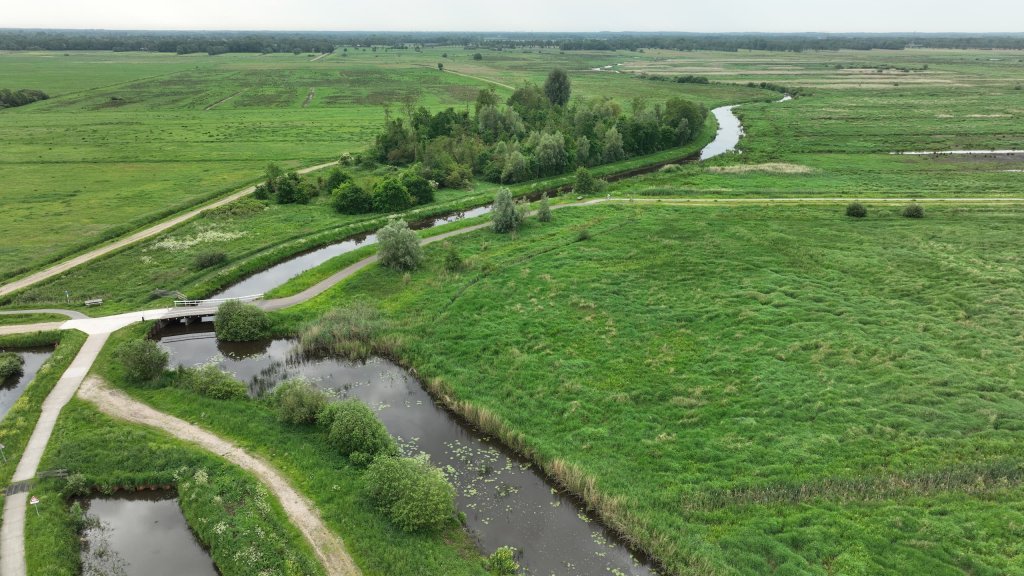
We're working with other parties to tackle the challenges in the area. Only by working together can we find solutions. This approach calls for new forms of collaboration; it's a process of change, also in terms of organisation and governance. Noorderzijlvest wants to take a leading role because we see water as a connecting foundation for all functions in the area.
We're improving water management in nature reserves and boosting biodiversity in rural areas. With a regional approach, we're looking at how the tasks related to nature, agriculture, climate, and water can reinforce each other. This way, we identify bottlenecks, opportunities for synergy, and potential solutions, laying the groundwork together for a balanced and widely supported approach.
Within the regional approach for the Kop van Drenthe, Noorderzijlvest water authority collaborates with the Province of Drenthe, the municipalities of Noordenveld and Tynaarlo, water companies, Staatsbosbeheer, Natuurmonumenten, Het Drents Landschap, LTO (Land and Horticulture Organisation Netherlands), and DAJK (Association for Young Farmers Drenthe). Commissioned by the Province of Drenthe, delivery organisation Prolander is working on the various tasks.
More information about the Kop van Drenthe project
De Onlanden
Nature and balancing lake are both important in the De Onlanden area. When there is heavy rainfall, we can collect water here. This minimises the impact of the water on local residents. Due to climate change, we expect more frequent and heavier rainfall. This means we need extra space for water.
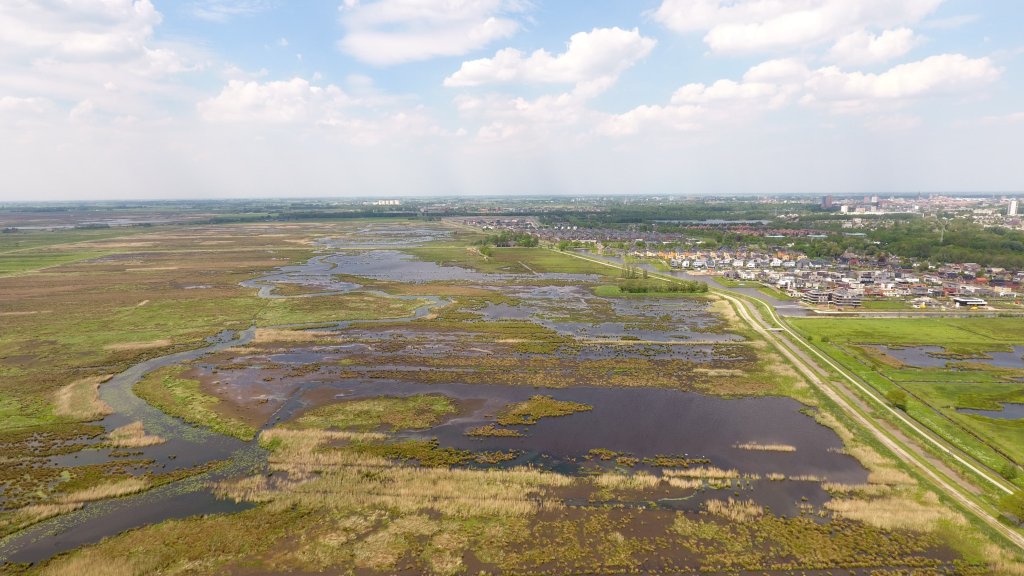
The three northern provinces and three northern water authorities used the 'Droge Voeten 2050' (Dry Feet 2050) project to study the measures required to combat flooding until 2050. The 'Optimisation of De Onlanden' project is part of this.
The Noorderzijlvest water authority wants to create an additional balancing lake in De Onlanden. In March 2022, the provincial executive of Drenthe started the procedure at the request of the water authority. Water is already being collected in De Onlanden during heavy rainfall. Climate scenarios predict increasingly frequent periods of heavy and prolonged rainfall. This means that extra space is required for a balancing lake in this nature reserve. The collection capacity will be expanded from 7.5 to 12.7 million cubic metres.
Initiator Noorderzijlvest Water Authority and competent authority Drenthe provincial executive are working together with the Groningen provincial executive and the municipalities of Tynaarlo and Noordenveld to create the additional balancing lake De Onlanden. The site managers Staatsbosbeheer, Natuurmonumenten, and Stichting Het Drentse Landschap are also involved in the discussions.
In 2024, the Provincial Executive of the Province of Drenthe approved the draft project decision for the so-called Hooiweg variant. This draft, together with the accompanying environmental impact report, will be available for inspection from 10 December 2024 to 21 January 2025. Several meetings have been organised in December and January.
After the period of public inspection and consultation, the Provincial Executive will take a final decision on the approach to the balancing lake in 2025. The results and the Response Memorandum will be published. Implementation will follow. The additional balancing lake is expected to be partially operational as of 2025.
You can read more about the project on this page: Expansion of De Onlanden balancing lake
Lauwersmeer dyke
Between Lauwersoog and the Westpolder, we are reinforcing the Lauwersmeer dyke to ensure that we remain well protected against flooding in the future. We are raising the dyke and replacing its revetment. We are doing this in a sustainable manner: by designing and building in a circular way and limiting emissions. We are also promoting biodiversity around the dyke.
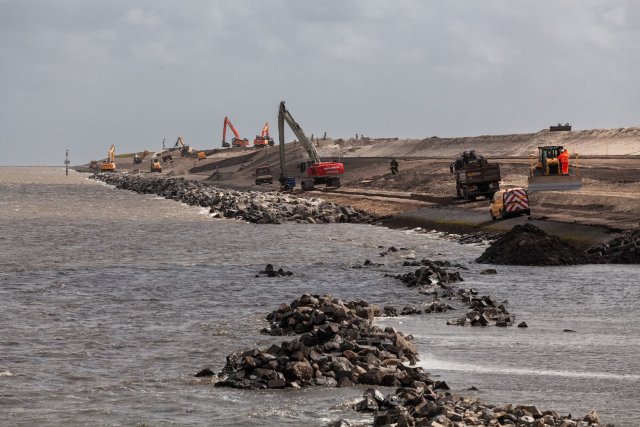
Reuse and electric vehicles
In 2024, we put our sustainable collaboration into practice by reusing as many materials from the old dyke as possible. For example, copper slag blocks, asphalt, sand, and clay. New materials are only sourced from the region if reuse is not possible.
We also limit emissions by using regional clay and deploying electric work vehicles as much as possible. Our contractors, Combinatie Waddenkwartier (Heijmans and GMB), invest in new technologies and work with local subcontractors to reduce CO₂, nitrogen, and particulate matter emissions. Transport along the 9-kilometre route is also carried out using electric trucks.
Sustainable dyke | Dyke reinforcement Lauwersmeer-Vierhuizergat
Collaboration
By reinforcing the dyke, we are also strengthening the Wadden Sea nature, traffic safety, and recreation around the dyke. This involves the construction of a second access road, with the municipality of Het Hogeland, to the port of Lauwersoog with the municipality. And for nature, the construction of a natural transition from the dyke to the Wadden Sea, a natural salt marsh, and a dyke passage with a transition area. We are carrying out these extras together with the municipality of Het Hogeland, the Groningen provincial executive, Rijkswaterstaat, and Groninger Landschap, also on behalf of nature organisations Natuurmonumenten, Staatsbosbeheer, and Natuur en Milieufederatie Groningen.
More information about the Lauwersmeer dyke. Home | Dyke reinforcement Lauwersmeer-Vierhuizergat
Lauwersmeer area
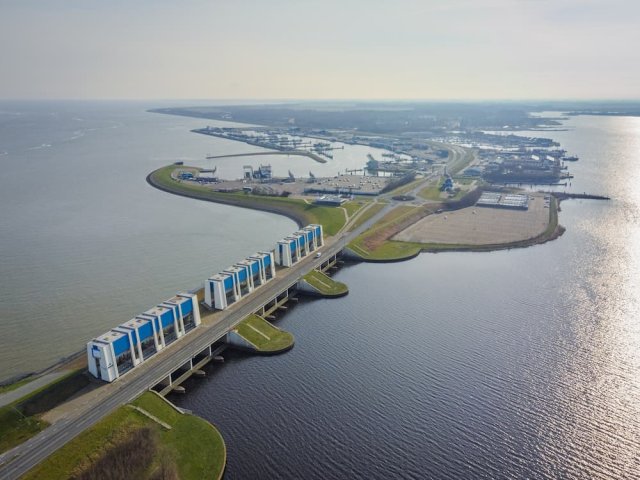
Lake Lauwersmeer is important for nature, agriculture, recreation, military use, and for the storage and discharge of water from Groningen, Drenthe, and Friesland. The nature and ecological water quality of lake Lauwersmeer and the Wadden Sea are vulnerable. To improve this, government bodies, nature organisations, and farmers are working together on a better connection between lake Lauwersmeer and the Wadden Sea. A more natural transition between fresh water and saltwater is important for fish, water quality, and biodiversity. For this, the northern part of the lake can become saltier, while the southern part remains fresh for agriculture.
Saltwater monitoring network
A saltwater monitoring network will be set up to monitor the salt content. This will enable the regional partners to explore in detail how we can achieve the transition from fresh water to saltwater. In 2025 and 2026, all measuring points will be set up, both in and around the lake. Information is public and will eventually be accessible on an online dashboard. The exploration will continue until 2028. The regional partners are exploring in detail how we can achieve the transition from fresh water to saltwater.
Partners
The Saltwater Monitoring Network and the study are being carried out within the Programmatic Approach to Large Waters (PAGW). The partners with whom Norderzijlvest water authority collaborates within the PAGW Future-proof Lauwersmeer are: Rijkswaterstaat Noord-Nederland, Staatsbosbeheer, and Rijksdienst voor Ondernemend Nederland. We also work with nature organisations, farmers, and other authorities in the area.
International cooperation
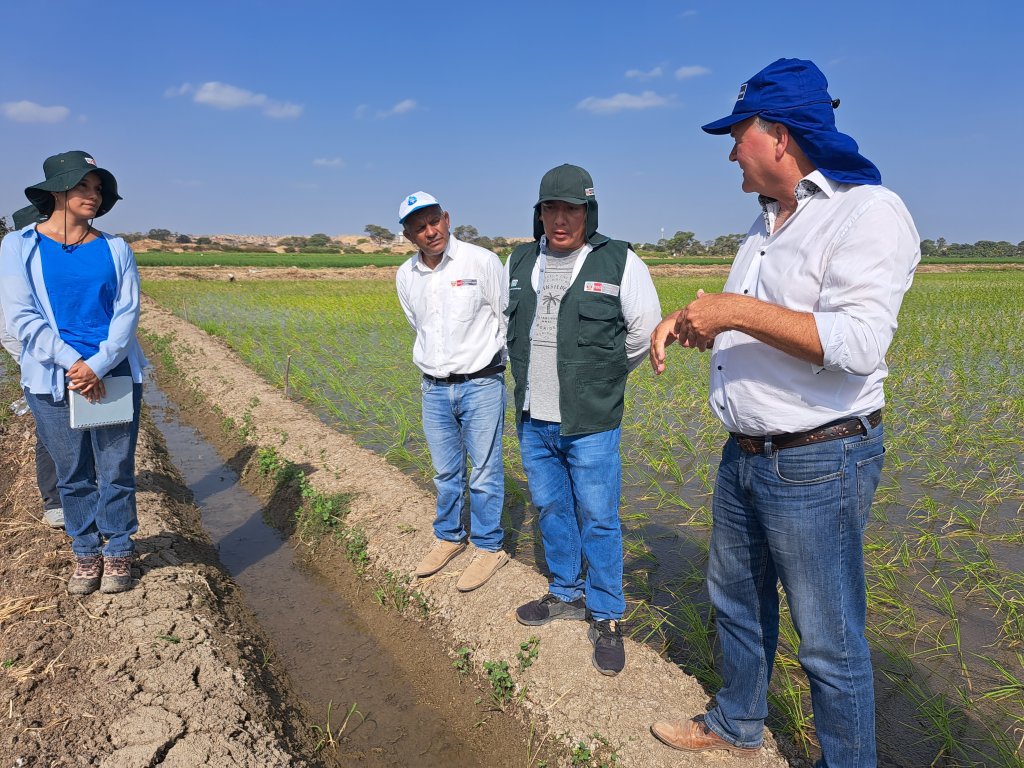
International cooperation "far away" contributes to sustainable and climate-proof development of the world. It is a form of knowledge exchange and contributes to making the world a better place. Together with other water authorities, we look beyond our own borders. In the water world, everything is interconnected, so we also work internationally on good water management. In this way, we ensure that everyone has clean, safe, and sufficient water today and tomorrow. In our work abroad, we focus on three ambitions: dealing with global climate change for a sustainable future, exchanging knowledge with all water managers worldwide, and, as an organisation, preparing employees for all the water challenges that lie ahead.
In 2024, we visited various countries, including Peru and Romania. The Noorderzijlvest Water Authority participates in the so-called Blue Deal projects. In 2024, we were questioned about this collaboration by journalists from Dagblad van het Noorden and Leeuwarder Courant.