Lauwersmeer Dike completed: new coastal zone shows how the Netherlands is preparing for rising sea levels
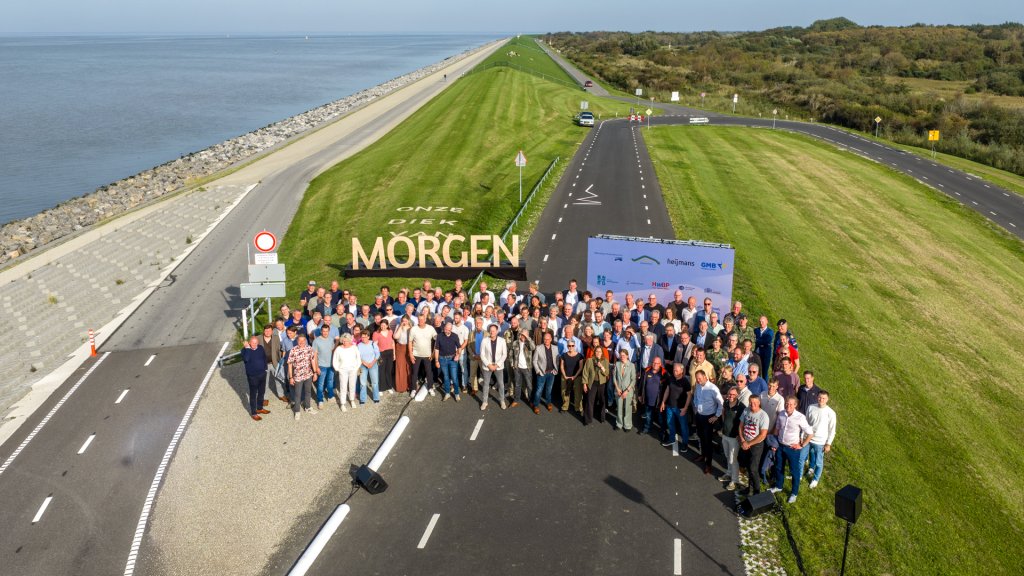
With the completion of the Lauwersmeer Dike, the Netherlands regains a coastal zone that not only meets the latest safety standards but also demonstrates a different approach to water management. The dyke , strengthened within the Flood Protection Programme (HWBP) is the first place in the Netherlands where nature restoration, tidal dynamics, and water safety come together on this scale. The project marks a broader movement in which traditional dike reinforcement is complemented by ecological and landscape functions.
A controlled tide behind the dyke
The choice to bring the tide back into the inland area is striking. Via an innovative tidal culvert Water flows from the Wadden Sea into a new 70-hectare tidal landscape. The area restores tidal dynamics, provides habitat for fish and birds, and forms a buffer that adapts to extreme water levels. This creates a coastal zone that not only protects but also responds to the ecological dynamics of the Wadden Sea: UNESCO World Heritage.
Preparation for a changing climate
The Lauwersmeerdijk no longer met national safety standards. dyke It has been raised, reinforced, and fitted with new cladding, but the project explicitly goes beyond technical strengthening. By combining nature and water safety, a more robust system is created that is better able to withstand sea level rise and more intense storms. It fits into a broader trend in which water managers seek ways to give space to natural processes, rather than controlling them completely.
Administrative cooperation as a prerequisite
The work was initiated and carried out by Noorderzijlvest Water Authority , Municipality of Het Hogeland, Province of Groningen, Rijkswaterstaat (on behalf of the Programmatic Approach to Large Water Bodies ), Stichting Het Groninger Landschap also on behalf of Natuurmonumenten (Dutch Society for Nature Conservation) , Staatsbosbeheer (Dutch Forestry Commission) and the Nature and Environment Federation Groningen, the Flood Protection Programme and the Waddenkwartier combination by Heijmans and GMB. The project demonstrates how water safety, nature development, and area development in the Northern Netherlands are increasingly working together.
The Lauwersmeer Dike serves as a model project within the HWBP: a dyke which not only offers protection for the coming decades, but also shows how the Netherlands is trying to make its coastal landscape future-proof.