Noorderzijlvest Water Authority and the Province of Groningen Open Dubbele Dyke
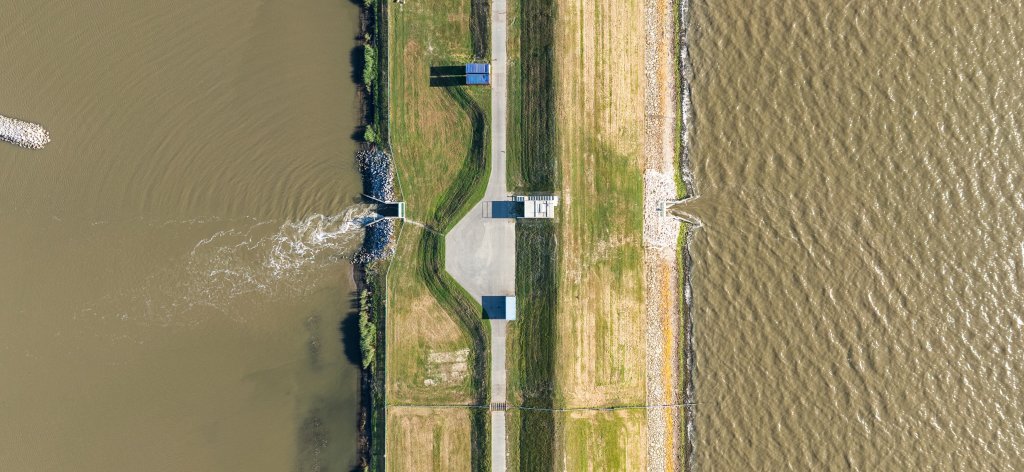
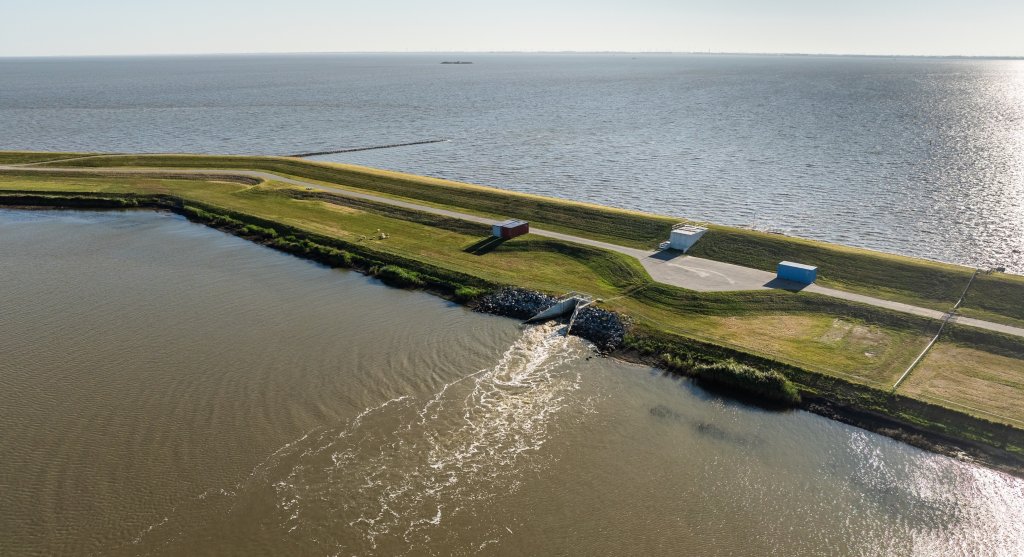
Bierum – On September 18, the “ tidal culvert ” (Sludge Retention Area) of the “Dubbele Dyke ” was officially opened. With this, this unique “ dyke ” is now functioning as intended. The “Dubbele Dyke ” protects the hinterland against high water while also providing space for nature development, sludge retention, saline agriculture, and aquaculture. The opening was performed by Leo Wenneger, a member of the Provincial Executive of Groningen, and Eisse Luitjens, executive director of the “ Noorderzijlvest Water Authority.” Delta Commissioner Co Verdaas was also present. With the opening of the “ tidal culvert ,” the area between the two “ dykes ” is now subject to the tides. This marks the start of a new phase in research on water safety, nature conservation, sediment management, and saltwater agriculture.
A Coast Ready for the Future
The Double Dyke consists of a high sea dyke, a second, lower dyke further inland, and the area between them. Together, they provide protection against flooding. Through this pilot project, the partners are investigating whether a wide coastal zone could eventually serve as an alternative to the ongoing raising and widening of dykes. In addition, they are examining how nature, the economy, and water safety can reinforce one another. The “Dubbele Dyke ” project was made possible realised with support from, among others, the “ Flood Protection Programme ” (HWBP) and the Wadden Fund.
Tides Create New Habitats
The " tidal culvert " connects the Eems River with the area behind the " sea dyke." Through this " connexion ," brackish water flows into and out of the area twice a day. In the southern part of the "Dubbele Dyke ," this creates a tidal zone where silt from the Eems can settle. At the same time, it creates space for unique brackish-water ecosystems. Birds find resting and foraging areas there. Fish, crustaceans, mollusks, and halophytic plants also benefit from the new conditions.
The sediment carried in by the water is not only important for nature. In the future, it can also be used as a sustainable raw material, for example, to reinforce dikes. The Dubbele Dyke is part of Eems-Dollard 2050. This programme is working on nature restoration, in part by removing sediment from the Eems.
The text continues below the image.
Opportunities for Agriculture and Aquaculture
The Dubbele Dyke also offers opportunities for agriculture. Brackish water flows into the northern part of the area through a culvert. Here, experiments are being conducted with salt-tolerant crops and forms of aquaculture, such as seaweed cultivation and the farming of shellfish and crustaceans.
Delta Commissioner Praises Dubbele's Guts and Vision Dyke
The knowledge gained from the “Dubbele Dyke ” is also of great value outside of Groningen. At the opening, Delta Commissioner Co Verdaas expressed his appreciation for the project: “The Netherlands faces the major challenge of ensuring that people can continue to live and work here safely and comfortably in the long term. Here in Groningen, we’re breaking new ground: we’re using the natural dynamics of the sea to ensure our water safety instead of fighting them. The beauty of this experiment is that it’s combined with trials for climate-resilient agriculture and nature conservation. The lessons learned at the “Dubbele Dyke ” are of great value to the rest of the Netherlands—and even beyond. The fact that the province and the “ water authority ” are joining forces on this demonstrates courage and vision.”