Water Framework Directive (WFD) measures in Drenthe
The Noorderzijlvest Water Authority is working on making weirs accessible for fish and on constructing 3 kilometres of nature-friendly banks.
Making five weirs passable for fish
In the province of Drenthe, the Noorderzijlvest Water Authority is working on five fish passages . This will improve migration opportunities for a large number of fish species, such as the ide, eel, spined loach, and river gudgeon. These fish swim from Lauwersmeer to Eelder- and Peizerdiep, where they can spawn. There is one fish passage in the Peizerdiep near Sterrebos and four in the Grote Masloot. In addition to the fish passages, we are constructing nature-friendly banks in the area.
The construction of fish passages and nature-friendly banks has transformed the lower and upper courses of the Eelder and Peizerdiep into a single entity where fish can move around freely. These projects have been made possible by European subsidies (ELFPO).
Subsidy
The water authority receives a subsidy from the European Agricultural Fund for Rural Development for the project.
Fish passages Grote Masloot
Construction of the four fish passages in the Grote Masloot began in September 2017. Contractor De Waard b.v. from Zeewolde is carrying out the work for the Noorderzijlvest Water Authority.
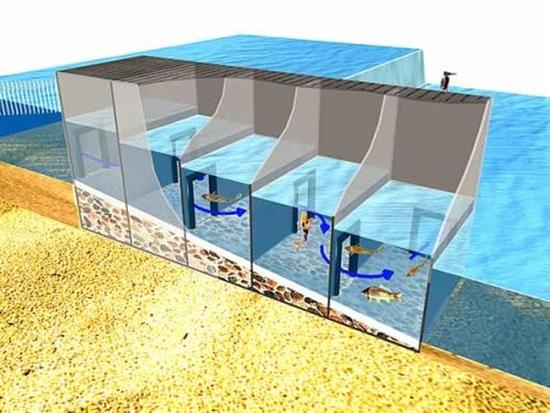
These are known as De Wit fish passages. They take up little space and are built in the slope next to the watercourse. This allows the water authority to close the passage when there is little water in the summer, so that the water does not run away. Because fish mainly migrate in the spring and fall, this has no impact on them.
The four fish passages in the Grote Masloot will all be put into use in 2017.
Sterrebos fish passage
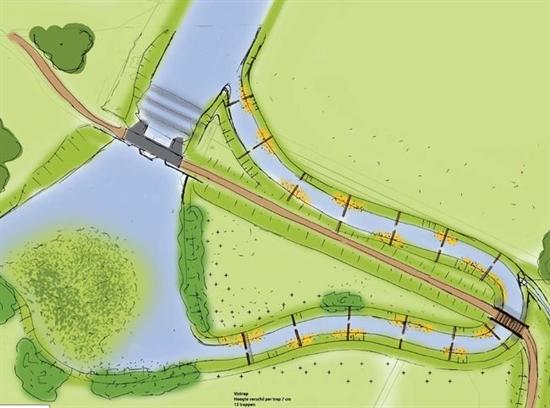
The fish passage of the weir in the Peizerdiep near Sterrebos no longer met the requirements. The Noorderzijlvest Water Authority decided to build a new fish ladder around the existing one, a so-called bypass. The total water level difference that needs to be bridged is approximately 1 metre. The existing fish ladder consisted of 20-centimetre steps. This is suitable for large fish, but for small fish the current is too fast and the steps are too high. The new fish ladder will have 7-centimetre steps, which will also give small fish a chance weir pass the weir.
The location of the new fish passage is in the habitat of the pool frog. A new habitat has been created for these frogs further down the river. This phase of the project has been completed. The new fish ladder is scheduled to be completed in the first half of 2018. It is important that this fish passage functions properly. It is the first large weir the Peizerdiep that the fish encounter and therefore has an impact on fish stocks upstream in the area.
Nature-friendly banks
Water plants can grow on the gently sloping banks that we construct. These plants extract nutrients from the water, making it clearer. The bank plants also provide protection for fish and aquatic insects. They can hide among the plants on the shallow banks to mate or raise their young. This macrofauna is part of natural water and contribute to water quality. It also reduces the negative effects of nitrate runoff from adjacent agricultural land.
In Drenthe, the Noorderzijlvest Water Authority is constructing a total of 3 kilometres ofnature-friendly banks. A total of 1.5 kilometres have been completed already. We purchase the land we need for the banks or construct the banks in collaboration with the landowner. We show them how to construct a nature-friendly bank according to our guidelines, and they receive compensation.
Subsidy
- European Agricultural Fund for Rural Development
- Province of Drenthe
These projects are made possible in part by European subsidies (ELFPO)
More information