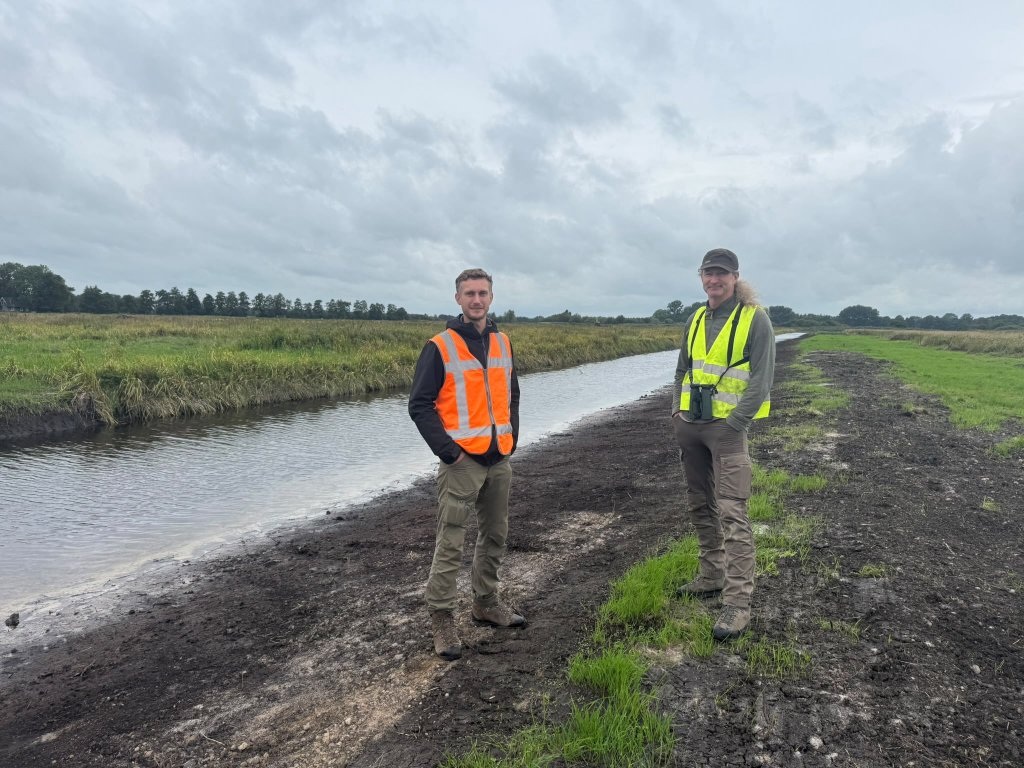
Meet ecologists Jan Brandt and Meino
September 23, 2026
The Onlanden is not only a " balancing lake," but also a vulnerable nature reserve. Work is underway in various locations to expand the " balancing lake." This is being done with great care for the flora and fauna that inhabit the Onlanden.
That is why, during the project, the contractor and the “ water authority ” are working closely with ecologists Jan Brandt and Meino from Successie Natuurcollectief. They are overseeing the work from an ecological perspective. But what exactly does that entail? And what animals do they encounter while working? We asked Jan Brandt and Meino.
What does it mean to work under ecological guidance?
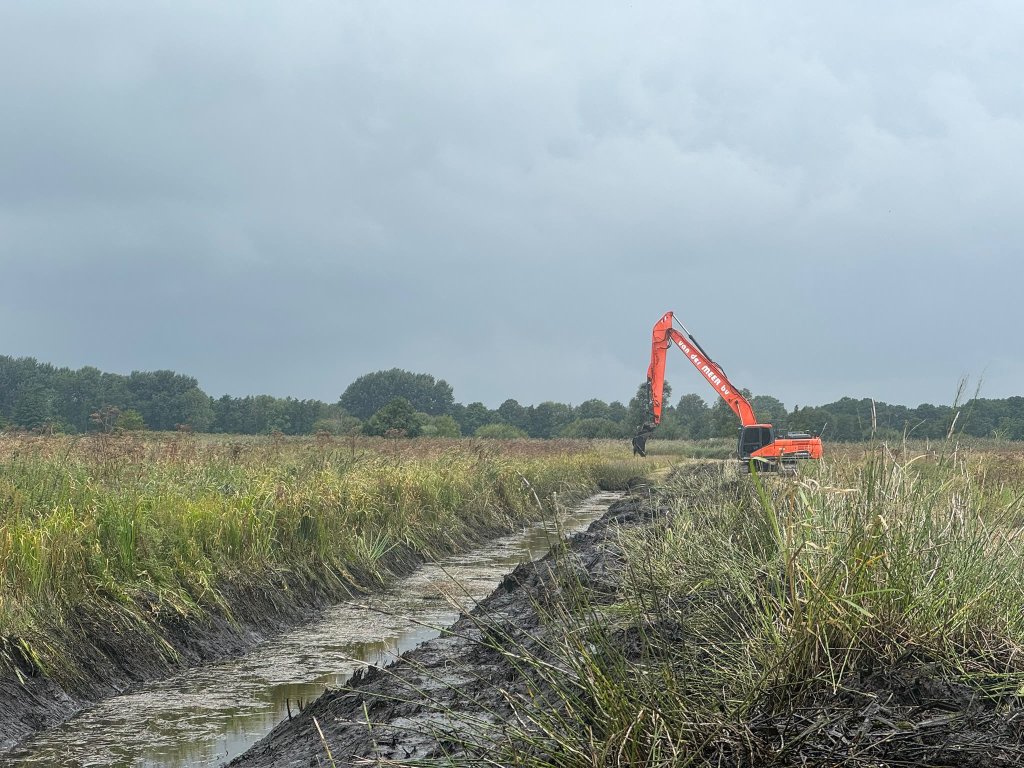
Working under ecological supervision means that activities are carried out in accordance with an ecological work protocol. This takes protected flora and fauna into account. Before and during the work, Jan Brandt and Meino monitor the region. If necessary, they walk ahead of the crane, for example. They inspect the area and also check the material being moved—such as dredge spoil —for the presence of animals and other species. All findings are recorded in a logbook and discussed with the organizations managing the site.
“We’re constantly monitoring what’s present in the area and what that means for the work. If we encounter a protected species, we discuss with the contractor what we can do to minimize disruption to that species.”
This may involve working around an animal or plant, mowing in phases so that animals have a chance to get away, or using different equipment. Sometimes animals—such as frogs—are carefully relocated to a suitable spot. This allows the work to continue while minimizing the impact on nature as much as possible.
What's your day like?
Jan Brandt and Meino visit the Onlanden about twice a week. They walk through the areas where work is currently underway or where work is planned. They check which species are present and then discuss with the contractor how the work can be carried out as carefully as possible.
The ecologists thus serve as a vital link between nature and the project’s implementation. They not only monitor the site but also actively contribute ideas regarding how the work should be carried out.
Why are we working in a sensitive nature reserve right now?
“For many species, September is a good time to carry out work in sensitive natural areas. The breeding season for many species is over by then, and amphibians begin their winter dormancy around October.”
The contractor will adjust the schedule accordingly. The area will be mowed short prior to the start of the work. This will make it less appealing for animals to settle in the exact areas where work is being done.
How do you know where animals and plants are?
Proper preparation is important. Before work begins, the ecologists inspect the areas where work will take place. They identify which species are present and where they are located. Volunteers and land management organizations also have a great deal of knowledge about the area. They often know exactly which species occur in the Onlanden and where to find them. Jan Brandt and Meino can put this knowledge to good use during their inspections and in preparing for the work.
What unusual species do you come across?
De Onlanden is one of the most biologically diverse nature reserves in the northern Netherlands. Jan Brandt and Meino regularly encounter unusual animals while they work.
"We see all kinds of animals here, from amphibians such as frogs to mammals like the weasel and the polecat. Rare breeding birds such as the whinchat and the red-backed shrike are also found in the area. In and around the water, we regularly encounter fish, including the tench."
What benefits do these activities have for nature?
The sites where we are currently working are Langmameer and Eelderdiep-Midden. These are areas in the Onlanden that are home to a wide variety of plants and animals. At present, the water authority is carrying out topsoil removal work here. This involves removing the top layer of soil. This topsoil is used to raise and reinforce the flood embankments, but it is also favourable for nature conservation efforts in the area. Removing the nutrient-rich topsoil creates space for unique flora and fauna that depend specifically on nutrient-poor conditions.
In addition, nature-friendly banks are being constructed. These banks promote greater diversity in flora and fauna because they slope gently from land to water. They provide food, shelter, and breeding grounds for fish, insects, amphibians, and birds, among others.
Working Together Carefully on the Onlanden
The work being done in the Onlanden demonstrates that water management and nature conservation can go hand in hand. Thanks to the efforts of Jan Brandt, Meino, and the contractor, they are constantly seeking the best balance between project implementation and the protection of the unique natural environment in the Onlanden.