What we do
Employees of the water authority work hard on various issues. For example, we believe it is extremely important that we can live safely with water, that clean and healthy water is available, that we treat wastewater properly, and that there is sufficient water in every season.
The work we carried out in 2024 is listed by theme. But that is by no means everything. Collaborative projects and large-scale regional projects are not included here. We provide more information about these under the heading "How we collaborate."
In addition to all the work mentioned in the themes below, we do much, much more. Here is a small and incomplete list:
- On World Water Day, we take primary school children on The Journey of Rain
- We work on a double dyke around Bierum
- We renovated the Drie Delfzijlen pumping station
- We worked hard on the renovation of Zoutkamp
- We carried out a triennial quay and flood-defence inspection
- Major maintenance was carried out on the R.J. Clevering locks at Lauwersoog
- We walked the story experience trail with Biblionet Groningen and primary school children
- We welcomed more than 60 fish experts for an excursion on fish migration
- We received an award for restoring the lock complex at Aduarderzijlen
- We organised an Open Day in Lauwersoog as part of World Fish Migration Day
- We asked our residents for their opinion on our services
- We worked on artificial reefs in the Wadden Sea
- Many colleagues participated in the Climate Classic bike ride to raise awareness of climate change.
- We rowed together with the many young people from GIAS across the Diepenring in Groningen
- We started to generate our own energy at treatment plants by using solar panels
- We took part in many international collaboration projects
- We renovated the Eelderwolderpolder dam
- We talked about the value of water at the Let's Gro event
- We welcomed many delegations from abroad to learn from each other about our work on water
- Started the renovation of the Waterwolf pumping station
- We were concerned about a new code of conduct for our management and maintenance, and reached clear agreements
- We simulated the pounding of waves on a sea dyke to find answers about the use of the right top layer for dykes
Activities by theme
Waterproofing the future
We live in one of the most dangerous areas in the world because our country lies below sea level. To protect ourselves from the water, we have built dykes and quays. Sometimes there is a lot of rain in a short period of time. We store the excess water in areas designed for this purpose. This keeps our feet dry. We have to learn to live safely with too much water at some times and too little at others.
We do a lot of work to live safely with water. This will also be the case in 2024:
Lauwersmeer dyke reinforcement
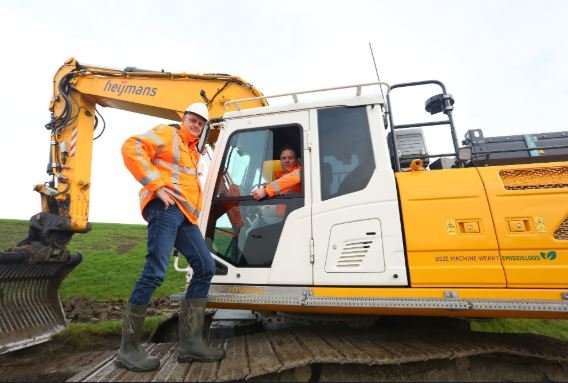
The Lauwersmeer dyke in Groningen is located between Lauwersoog and the Westpolder. We are currently reinforcing this dyke to protect ourselves against future flooding from the sea. After a period of preparation and joint planning, we started work in 2023. The dyke reinforcement will continue until 2027.
We made great strides in 2024. We reinforced 4,500 metres of the national dyke and installed new sheet piling on the harbour dyke. We also constructed a brand-new 450-metre bicycle path and a 250-metre walking boulevard. This year, we used around 45,000 m³ of sand, 34,000 m³ of clay, and more than 21,000 tonnes of crushed stone for the dyke reinforcement, and we sowed more than 100,000 m² of grass. Our electric work vehicles ran for a total of around 10,000 hours and consumed approximately 300,000 kWh of green energy. The dyke information centre was also busy: we welcomed almost 2,000 visitors this year, 500 of whom came during Construction Day. In short, it was a successful year!
Would you like to know more about the dyke reinforcement? There is a special website with all the information about the dyke reinforcement: Dyke reinforcement Lauwersmeerdijk-Vierhuizergat.
Storm and high water levels
In 2024, we experienced high water and storms on several occasions. The period between October and April is known as the storm season. During this time, we are on standby to monitor the dykes and quays.
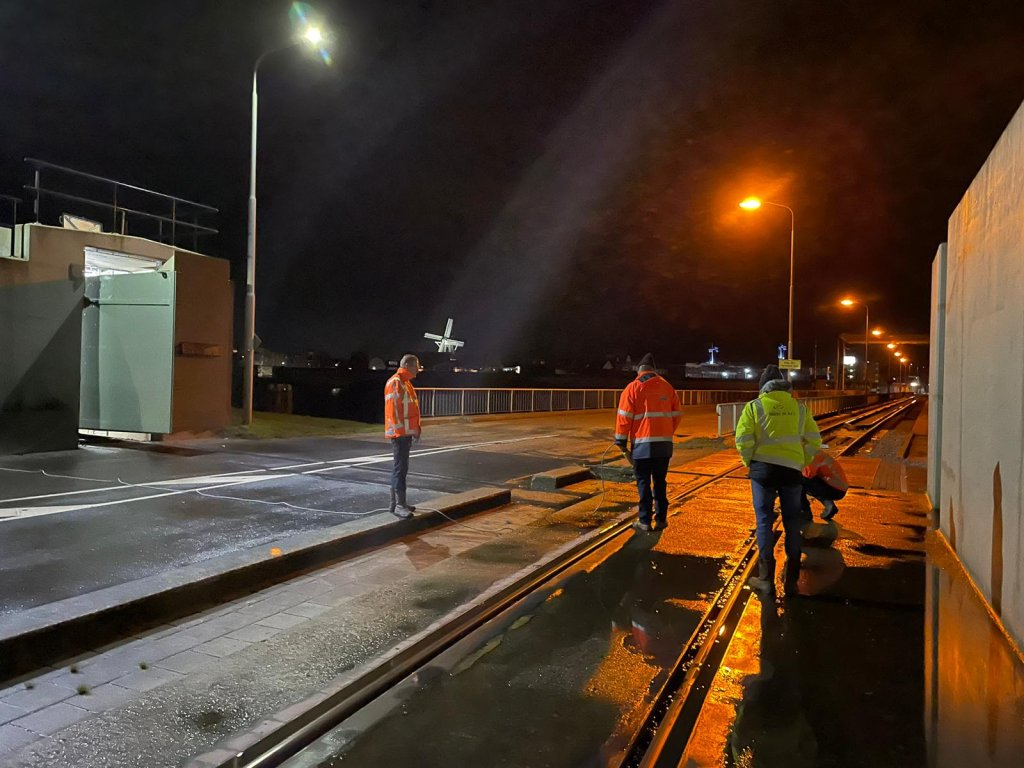
Between the city and the port of Delfzijl lies a dyke. This protects the city from seawater. There are four passages in the dyke. This allows us to go from the city to the port and vice versa. These passages have large doors: two electric roller doors, one revolving door, and one sliding door. We close these doors (also known as 'coupures') when the water level exceeds 3 metres above the Amsterdam Ordnance Datum.
Every year, we practice closing the coupures: This year's exercise closing Delfzijl dyke passages is on 25 September. And at the end of December, we closed the dyke passages in Delfzijl due to high water: Delfzijl dyke passages closing tonight due to high water at sea.
During the exercise, we made the video below:
Muskrat management
No more muskrats in our area by 2034. That is our goal, and our colleagues are working hard to achieve it. We are dealing with muskrats because they damage flood defences and riverbanks by digging burrows and tunnels in dykes. They also build nesting chambers with extensive underground tunnel systems. They can cause subsidence in dykes and quays, and we want to prevent that.
Muskrats and coypu also pose a threat to biodiversity. Therefore, both animals are on the European list of invasive species. They eat plants such as reeds and cattails, displacing native species such as the black tern, the bittern, and the reed warbler. These birds live in the reeds, which is also the habitat of muskrats and coypu.
An overview of the muskrats and coypu caught in the north can be found below:
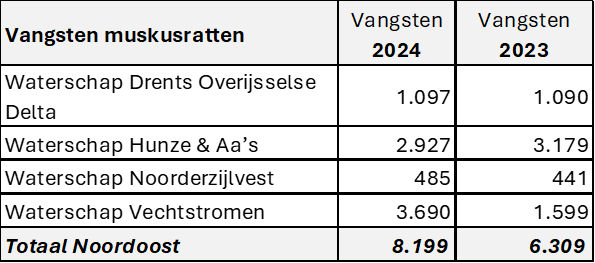
We caught three coypu in 2024.
We have muskrats and coypu under control in our area. This also explains why the catch numbers are lower compared to other water authorities.
Balancing lakes
When there is heavy rainfall, the water level in watercourses rises and the soil becomes saturated. This can cause problems. Sometimes it causes unsafe situations. During wet periods, the water authority works to manage the situation in order to reduce problems and prevent unsafe situations. This animation shows how we do that.
As shown in the animation above, we are preparing for extreme situations involving exremely large amounts of water. When we are unable to drain the water sufficiently and water safety is at risk, we use so-called balancing lakes. These are parking areas where we can store excess water temporarily. In 2024, we worked on preparing and creating new balancing lakes our area. We are doing this in De Onlanden and in the Zuidelijk Westerkwartier.
- You can read more about De Onlanden and what we have done on the page about De Onlanden: Expansion of De Onlanden balancing lake .
- More information is also available about the Dwarsdiep. This information can be found on the website for area development in the Zuidelijk Westerkwartier.Zuidelijk Westerkwartier.
Clean and healthy water
Clean and healthy water is a key task for the water authority. Healthy and clean water is important to us as humans, but also to plants and aquatic animals. We work with many organisations to make surface water increasingly cleaner. For example, by using fewer pesticides, creating more nature-friendly banks, redesigning certain waters, dredging, combating exotic species, and more.
Lake Paterswoldsemeer
In recent years, the Noorderzijlvest Water Authority has taken various measures to improve water quality. The goal: clean water, a wide variety of plants and animals, few blue-green algae, and manageable aquatic plant growth. The drainage route to Hoendiep has also been addressed.
By 2024, nature-friendly banks and zones, fish hotels, and fish forests will have been created in various locations. These areas offer fish and small aquatic animals a safe haven in which to develop. They strengthen the ecological balance and thus the water quality. Step by step, nature is returning. In places where aquatic plants cause nuisance to recreational users, the Meerschap mows them in line with the aquatic plant management plan. In this way, the plants contribute to the ecology of the lake, while recreational users can continue to enjoy the water.
It is a combination of measures that will ultimately improve water quality. In an earlier phase, a fixed water level and a new weir with a fish passage were already installed. An iron sand passage was also constructed. The iron sand filters phosphates from the water, keeping the lake cleaner and reducing the risk of blue-green algae.
Want to read more about this project? You can do so for a few more weeks on the Paterswoldsemeer project website: Home | Paterswoldsemeer Area Programme
Lauwersmeer area
We are also working to improve water quality around the lake Lauwersmeer area. We are doing this in collaboration with many other parties. An important focus of the work in the Lauwersmeer area is to offer prospects for nature and agriculture.
In this unique area, work is carried out to restore a more natural transition between fresh water and saltwater without disrupting agriculture.
At present, the R.J. Clevering locks and the dyke form a relatively harsh transition between fresh water and saltwater. This is unfavourable for fish and therefore for the natural quality of the Wadden Sea and Lauwersmeer. The availability of fresh water is important to agriculture. In order to take both into account, the first step is to establish a more comprehensive and accessible system for measuring salinity in and around the lake.
In 2024, we worked hard to prepare for the construction of a so-called Saltwater Monitoring Network in the area. The chloride monitoring network will be set up in 2025 and 2026. Measuring points will be installed in the lake and in nature and agricultural areas. This will allow the salinity to be measured daily at different locations and depths. We are also developing an online dashboard.
Swimming water and PFAS
From 1 May to 1 October, we monitor the water quality of the swimming spots in our region. The water authority manages 17 official swimming spots. The video below clearly shows how we do this:
We also checked our swimming locations for PFAS in 2024. The PFAS level in swimming spots in the province of Groningen is low. This is evident from checks that we recently carried out together with the Hunze en Aa's and Wetterskip Fryslân water authorities. This means that enthusiasts can continue to swim safely in the designated swimming spots.
The results show that the PFAS concentration for all tested swimming spots is well below the RIVM guidelines. According to these guidelines, a maximum of 280 nanograms of PEQ (collective name for several types of PFAS) per litre is allowed in swimming water. The values found in Groningen ranged between 0 and 37 nanograms. This means there are no health risks for swimmers.
Treated water
We all use water. The water authority cleans this water. This amounts to 55 billion litres of water per year. The Noorderzijlvest Water Authority has thirteen treatment plants. We have 401 kilometres of pipes and 110 pumps to transport water from homes and businesses to the treatment plants. We treat that water in a natural way at the treatment plants. Once the water is clean, we discharge it back into surface water. For example, into the Eemskanaal or the Van Starkenborghkanaal.
Modernisation of the Garmerwolde wastewater treatment plant
Better treated water is a significant step closer at our wastewater treatment plant (WWTP) in Garmerwolde. The first of three treatment lines has been modernised and renovated in recent months.
The 'line' was officially put into operation in November 2024. There are already positive reports about the performance of the renovated line. The removal of nitrogen from water used by households and businesses is improving. In addition, the use of chemicals in the treatment process is decreasing significantly.
We are proud of these initial results. We are now focusing on tackling the other two treatment lines in the coming years.
Over the past few months, we have been working hard with our partners at the Garmerwolde wastewater treatment plant (WWTP) to renovate, renew, and optimise one of the three treatment lines!
The goal: to treat sewage in a more user-friendly and sustainable way. We are reducing nitrogen emissions and adding fewer chemicals during the treatment process.
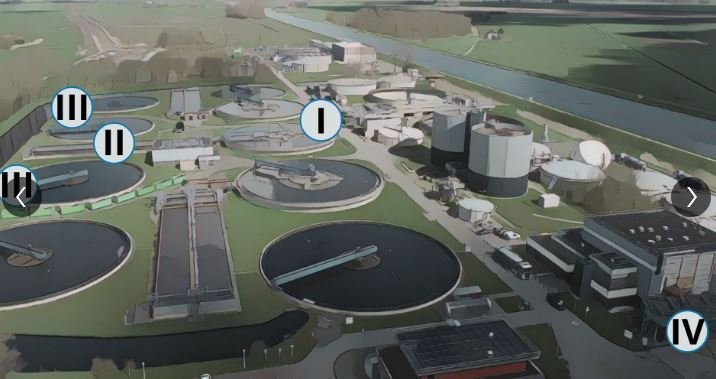
What did we do?
- ✔ I. Intermediate settling tank
The intermediate settling tank has been cleaned and inspected. We are increasing employee safety by installing a raised railing. - ✔ II. Aeration tank
In the renovated aeration tank, the water follows a longer, zigzagging route. More aeration plates have been installed too. This gives bacteria more time to remove nitrogen from the water. The mechanical and electrical components in this system have been renovated and partially replaced. - ✔ III. Secondary Settling tanks
In two secondary settling tanks (each with a capacity of 4,000 m³), the circulation channels, inlet drums, and cones have been replaced. In the secondary settling tanks, the treated water is separated from the sludge. The treated water is then discharged into the surface water. The sludge is also treated, including fermentation and compression into sludge cake.
New construction at Gaarkeuken
On Wednesday, 17 July 2024, the water authority celebrated the official start of the construction and renovation of the wastewater treatment plant (WWTP) at Gaarkeuken. The Noorderzijlvest Water Authority is building a new wastewater treatment plant in Gaarkeuken. This will eventually replace the old plants in Marum, Gaarkeuken, and Zuidhorn. Cleaner water, better for the environment, and less odour and noise in the surrounding area. All the information about the project can be found on our website created specifically for the Westerkwartier WWTP project: RWI Westerkwartier
The old sewage treatment plants in Marum, Zuidhorn, and Gaarkeuken are outdated. That is why a new treatment plant is built in Gaarkeuken. Gaarkeuken will become the central treatment plant that will take over the functions of the other plants. The plants in Marum and Zuidhorn will close in due course.
New sludge cake transfer
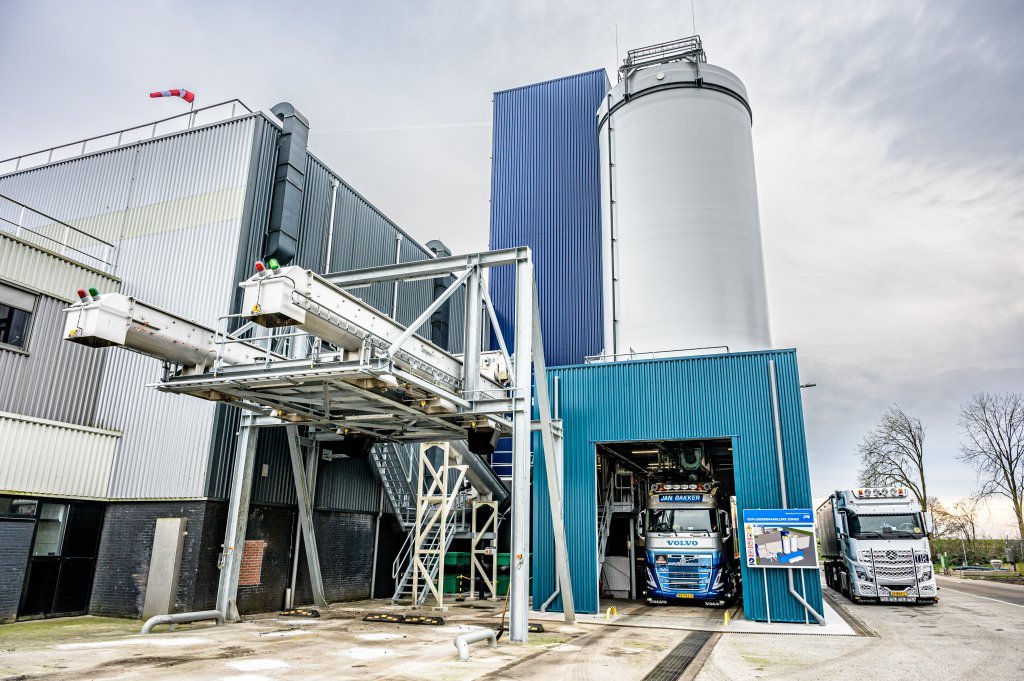
On Friday, 24 May, construction began on a new sludge cake transfer station at the wastewater treatment plant (WWTP) in Garmerwolde. The construction of a new sludge cake transfer facility stems from a desire for renewal. On the one hand, the water authority is striving for innovation, energy savings, and more efficient transport of sludge to partners who take care of the final processing of the sludge. On the other hand, these innovations result in less traffic, which is positive for all the residents near the Garmerwolde WWTP.
The new sludge cake transfer facility will reduce energy consumption by approximately 30 percent compared to the current installation. In addition, the loading of sludge into lorries will be optimised further. The lorries are placed on a weighbridge, allowing them to be loaded with great precision. This means fewer lorries on the road, which is better for all local residents. Because the construction mainly involves building upwards, it saves a large amount of space on the site of the wastewater treatment plant in Garmerwolde. The new transfer system is a so-called closed transport system. This means that employees will have less contact with the sludge cake. This makes the new working environment safer for staff.
The new sludge cake transfer system will be put into operation at the beginning of 2025. More information Festive completion of sludge processing investment projects at the Garmerwolde wastewater treatment plant
Enough water in every season
We started this year with heavy rainfall and a peak in water levels in our area. The pumping stations and weirs ran at full capacity to drain all the water via lake Lauwersmeer to the Wadden Sea. The high water levels led to some local flooding in early January. This included placing sandbags at a campsite on lake Leekstermeer.
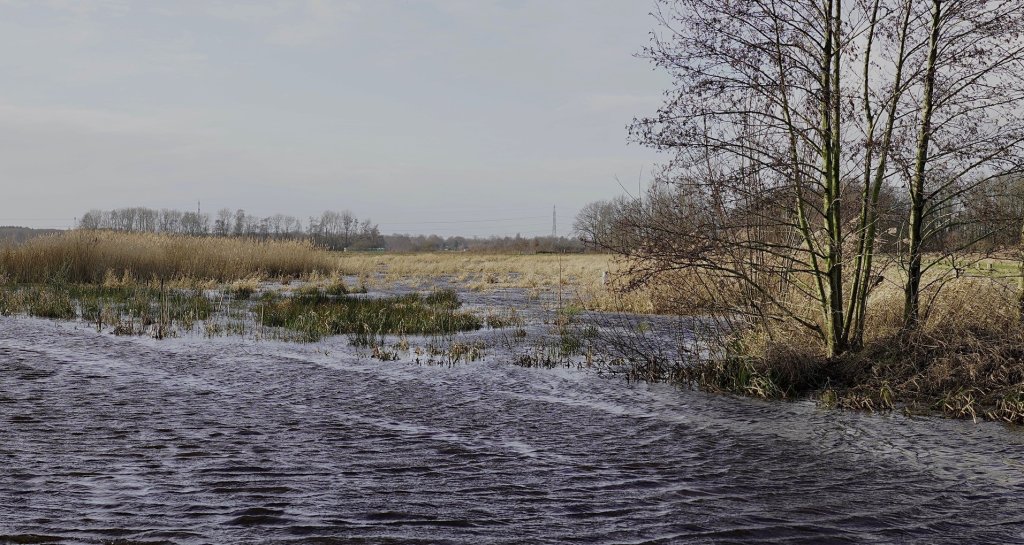
Due to the nuisance, overflow areas such as the Lettelberterpetten and the Lettelberterberg catchwater were also used. These areas can collect excess water temporarily. The situation was manageable and not extreme. Therefore, it was not necessary to use the balancing lakes.
On 5 January, the water level dropped rapidly and we were able to continue draining the water effectively.
In May, severe weather made it necessary to run the pumping stations at full capacity. The northwest of our region had extremely heavy rainfall, with more than 90 mm of water falling within an hour. Fortunately, we were able to pump away the excess water quickly with our De Waterwolf pumping station .
In June, water levels were also elevated due to heavy rainfall. Draining excess water takes time. The Waterwolf and HD Louwes pumping stations were operating at full capacity, as were all the polder pumping stations.
The Drie Delfzijlen pumping station was being renovated and electrified at the time of the heavy rainfall. As a result, the emergency plan was put into effect. Two pumps were installed at Bronssluis/Slimsluis in Garmerwolde to pump the excess water from Damsterdiep to Eemskanaal.
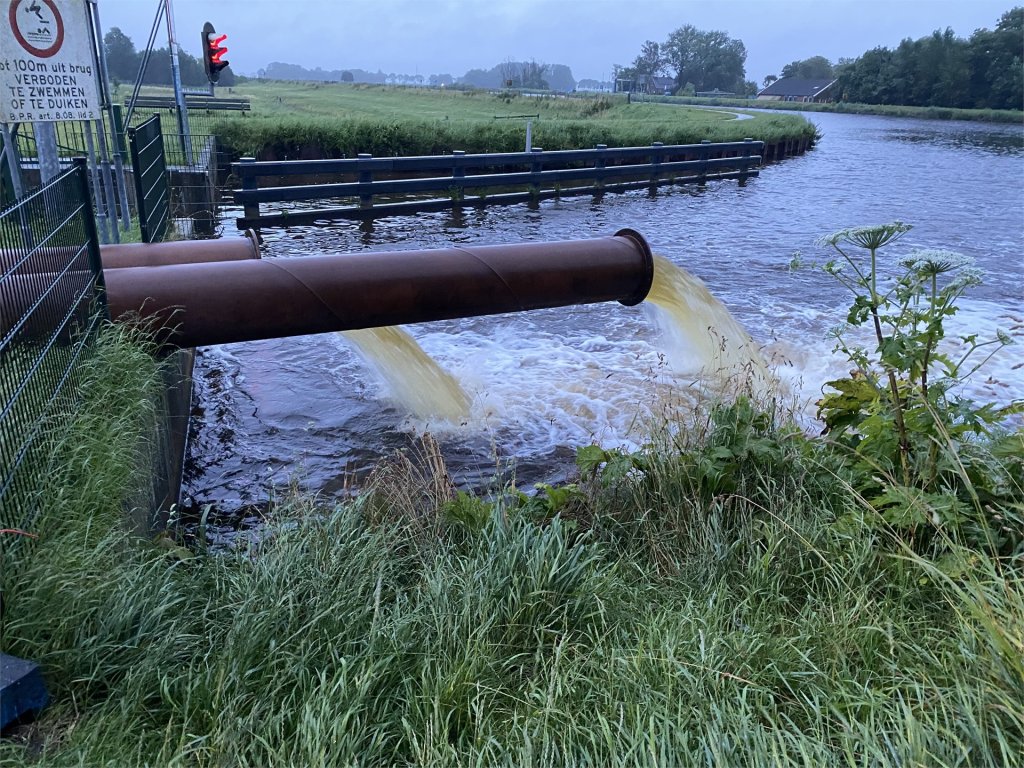
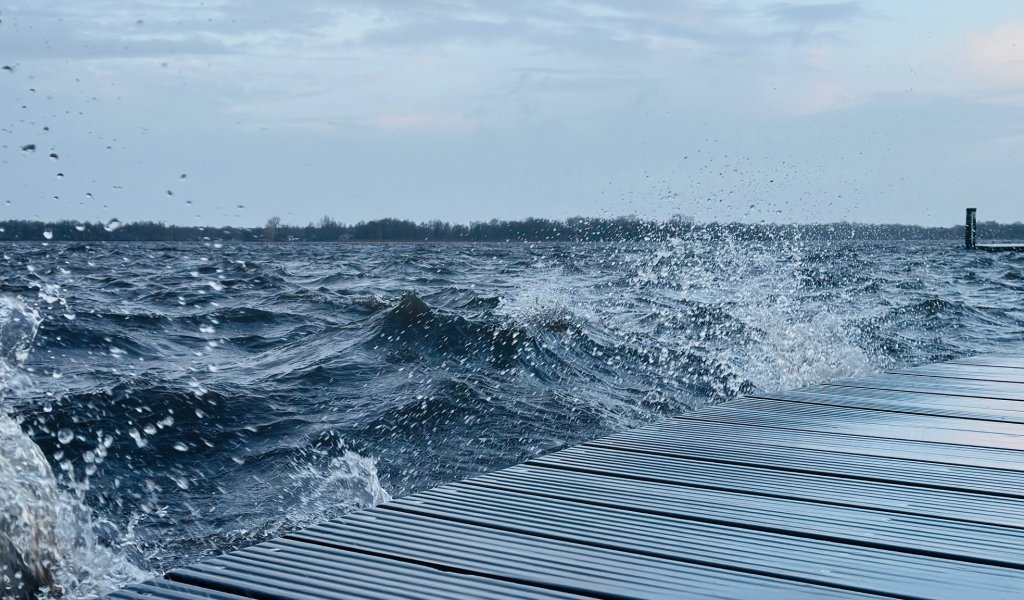
At the end of the year in December, we were once again talking about elevated water levels. However, by operating the pumping stations at full capacity, everything stayed under control.
Water retention in the Kop van Drenthe region
In the Kop van Drenthe region, we are working on a future-proof water system that prevents problems such as drought and flooding as much as possible. Our goals are: To make the water system more natural.
To improve the area's water-retention capacity in wet and dry periods.
To strengthen biodiversity by creating favourable conditions for more plant and animal species.
To connect and strengthen green (nature) and blue (water) zones.
To make the area resistant to extreme weather conditions.
To make agriculture future-proof.
Four studies were conducted in 2023 and 2024. These describe the current situation in the Kop van Drenthe for the water system (the ISA), nature (the LESA), agriculture, and the landscape (AAC – archaeology, geological values, and cultural history). We summarise them below.
In 2025, we will continue to work on this wonderful collaborative project. You can read more on the Kop van Drenthe page.
Pumps, weirs, and locks
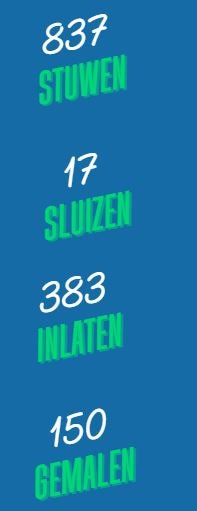
Did you know that we make extensive use of pumping stations, weirs, and locks to manage the water system in our area? Below is an overview of the number of pumping stations, weirs, locks, and more: