Saltwater monitoring network
We are setting up a monitoring network to determine the salinity in and around the lake. This will enable us, and our regional partners, to learn more about the water system in the area.
Monitoring
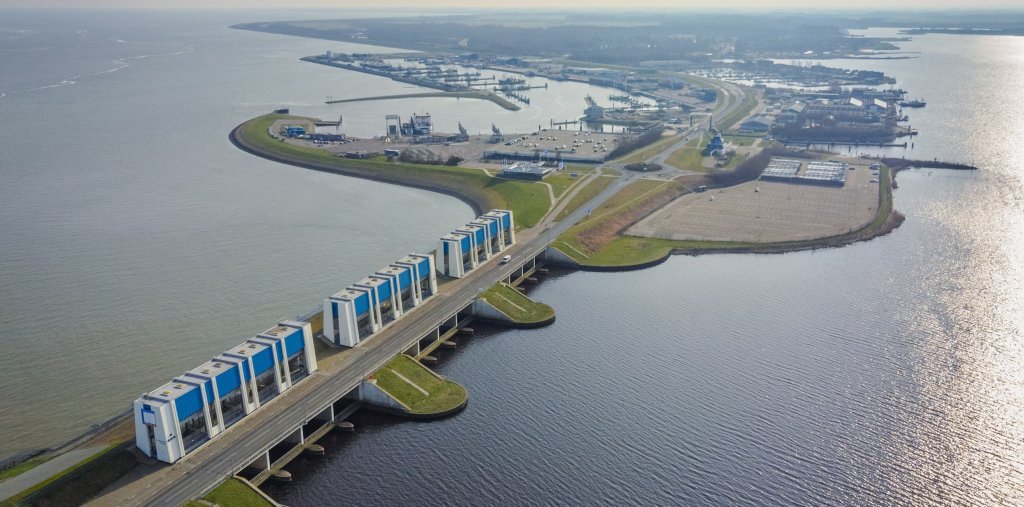
We want to be able to determine the salt content in and around lake Lauwersmeer accurately. That is why we have started constructing a chloride monitoring network: Saltwater Monitoring Network for the lake Lauwersmeer Area. In 2025 and 2026, various measuring points will be installed in the lake and in nature and agricultural areas. This will enable daily measurements of the salinity at different locations and depths. This will help us, and our partners in the area, to learn more about how freshwater and saltwater work in the area.
What exactly are we measuring?
Although the project is known as a 'saltwater monitoring network', the sensors actually measure the electrical conductivity (EC) of the water. In general, the higher the EC, the more ions there are, and therefore the saltier the water.
Acquiring knowledge
Data from the monitoring network is public. We are developing a user-friendly online dashboard. With the measuring points, the water authority hopes to answer questions such as: what is the freshwater-saltwater distribution in the lake throughout the year? Where is the boundary between freshwater and saltwater, and how can we control it? And what effect does the salt content have on water quality?
Monitoring network assists in further research
The measurement results assist our research. Together with other regional partners, we are exploring how we can achieve a more natural transition between freshwater and saltwater. This exploratory study will continue until 2028. The goal is to allow saltwater to enter the lake in a controlled manner, which will improve the ecological water quality.