Who we are
Under the heading Who we are, we are pleased to share information about our work on water. We believe it is important to explain who we are as an employer, how our board works, and how things stand with regard to elections. The water-authority elections took place in 2023 and will take place again in 2027. Therefore, we decided not to include this theme in our review and outlook.
Water rates are an important part of who we are. We use water rates to work on safe dykes and protection against flooding. We ensure sufficient and clean water in canals, ditches, lakes, and soil for agriculture, nature, and cities. How much you have to pay in water rates is determined by your situation. Under the heading water rates, we tell you more and this page also explains why you pay water rates. Why water rates.
Water authority as employer, the board of the water authority and water rates
Read more about it below:
Noorderzijlvest Water Authority as an employer
Working at the water authority means working in a dynamic region. We are faced with climate change and energy transition, but digital innovations also pose a major challenge. As an employer, Noorderzijlvest is always looking for colleagues who can balance different interests and seek a win-win situation.
How many people work there?
At Noorderzijlvest Water Authority, more than 300 colleagues work on different aspects every day. All of them work on the same themes. In 2024, these 300 colleagues ensured that we can live safely with water, enjoy clean and healthy water, that wastewater is treated, and that there is sufficient water in every season.
Who works at the water authority?
The Water Authority employs thinkers and doers. Over the past year, we have welcomed many new colleagues.
These include colleagues who work on the maintenance of our quays, ditches, and flood defences, as well as maintenance staff for our pumping stations and treatment plants.
In 2024, we recruited several policy advisors specialising in water and space. In addition to advisors, we also took on many trainees in 2024. These are talented people who can work on their personal and professional develpment with the help of internal and external guidance.
How many vacancies at the water authority in 2024
We welcomed many new colleagues in 2024. In total, more than 70 vacancies were posted on our website in 2024. We were looking for team leaders, programme managers, enforcement officers, procurement advisors, many trainees, but also members for the Court of Auditors. We were looking for maintenance staff, crisis management staff, service technicians, and policy officers.
What we are looking for in colleagues in 2025
In 2025, we will continue to seek out new talent and new employees to support the major challenges in our field. We also want to continue waterproofing the future in 2025, working to ensure sufficient water, treated, and clean and healthy water.
Will it be water-related work for you too?
We have vacancies, temporary assignments, internships, and graduation projects. Will you gor for water-related work? Our vacancies
From student to trainee: Daphne Dontje's experience
So how do you make the transition from studying to working? What are you trained for? And what is important to you in a great job and a good employer? In short: how do you work on your own 'future-proof living environment'?
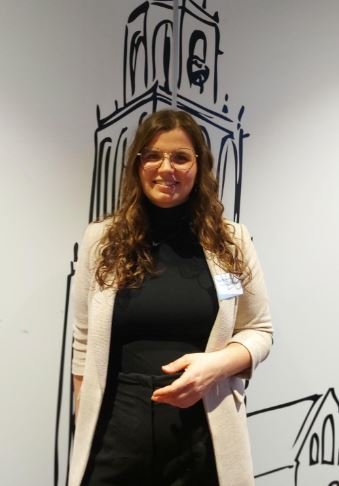
Trainee Daphne Dontje
🌊 Trainee Daphne Dontje, former student at the University of Groningen (Bachelor's in Social Geography and Urban Planning and Master's in Environmental and Infrastructure Planning) and now a trainee in Water and Spatial Planning at the Noorderzijlvest Water Authority, explains which steps were important to her:
💬 "During my studies, my part-time job at the SAC Groningen (Student Advisory Committee Groningen) brought me into contact with various organisations, including the water authority. The assignments I carried out for Noorderzijlvest were really interesting and diverse. Issues relating to space, climate, and quality of life come together in the tasks of the water authority. The water authority is also a political-administrative organisation. This adds an extra dynamic. In my daily work, I mainly deal with policy. But that doesn't mean I sit in the office from 9 to 5! There is a lot of coordination between governments and interest groups on various topics. During these consultations, we sometimes have to go out into the field to get a better picture of the area. This gives me energy, because then you really know what you're doing it for!"
🤝 Yesterday, she returned briefly to the University of Groningen - Faculty of Spatial Sciences to join dyke reeve Roeland van der Schaaf during the Geo Promotion in Martiniplaza to introduce other students to working with water in an interactive way. During the 'democracy game', the students formed different water authorities and gained insight into the political 'game'. It also became clear what impact decisions can have and that cooperation is necessary to achieve a future-proof landscape design.
💬 Daphne: "There were many enthusiastic students present during our workshop. It was nice to see how the different groups had different perspectives on the issues that arose in the game. The students certainly gained a better understanding of the work they could do at the water authority. My colleagues are really open, so I hope the students will contact us if they have any further questions about work, graduation projects, or if they would like to spend a day with us, for example."
Learn more about working at our water authority
Want to know more about working at our water authority and how you can contribute to a future-proof living environment? Discover our work, our colleagues, and of course interesting internships, graduation projects, and fun positions or trainee positions!
Noorderzijlvest Water Authority and its board
The Executive Board of water authority consists of six members. The dyke reeve is chairperson of the Executive Board and the Board of Directors. Our Executive Board also includes Herman Beerda (PvdA), Annette van Velde (combinatie Geborgd ongebouwd-VVD-CDA), Elze Reitsema (Water Natuurlijk), and Bert Wiersema.
Each board member has their own special responsibilities. Under the heading 'What we think', we asked the board members for their opinions in a comprehensive look back and look ahead. Want to know more? Take a look at What we think.
What did the Executive Board work on in 2024?
The Executive Board works on many different topics and is involved and active in various administrative consultations, committees, steering groups, and more. During these types of consultations, the interests of the water authority and its residents are represented.
In 2024, it was decided to make the agenda of the executive committee's meetings public. The agenda can be found on the website: Agenda Executive Board Noorderzijlvest - iBabs Public Portal
In addition, the Executive Board informs the Board of Directors of the following topics, for example:
| Kop van Drenthe | MJOP Cultural History | Lauwersmeer area process: Saltwater monitoring network for the lake Lauwersmeer area | Implementation programme | WWTPGaarkeuken: Additional credit of €3.8 million for WWTP Westerkwartier |
| Roadmap for Treatment | Annual Report on Permits and Enforcement | New Waterworks Zoutkamp | Exotic species policy | Customer satisfaction survey |
| Tax system adjustment act | Nij Begun: We create our Nij Begun together | Quarterly reports | Public Annual Report 2023 | Wide coastal zone |
| Pressure pipeline between Groningen and Garmerwolde | Appointment of youth panel | KRW programming | De Onlanden | International Cooperation |
| Annual Plan 2025 | Adjustment of tax system policy |
Many topics can also be found in our public administrative documents:
Dashboard Noorderzijlvest - iBabs Public Portal
Participation in committees and consultations
Our executive board members participate in numerous consultations with a wide range of stakeholders. These include national and regional meetings, such as administrative consultations with all the relevant provincial executives, municipalities, and other interest groups. Our board members also participate in all committees established nationally by the Union of Water Boards. An overview of the working groups can be found on the Union of Water Boards website.
What do our board members find important?
We asked our board members what they think about various topics. You can find their answers under the heading 'What we think'.
The Board of Directors the Noorderzijlvest water authority
The Board of Directors of the Noorderzijlvest Water Authority has 23 members. Together, they formulate the policy, regulations, and agreements of the water authority. They do so on behalf of the residents, farmers, foresters, and nature conservation groups. The residents are divided into different parties and are therefore elected during the water-authority elections.
In 2024, the Board of Directors organised various types of meetings:
- decision-making meetings
- informative meetings
- theme sessions
Topics on which decisions were made in 2024
| Purchase of Water-Authority Building | Dwarsdiep Water Level Regulation Plan | Deal with reserves | Adopt the International Cooperation Policy | Motion Urgent call for a PFAS ban |
| Adopt the contribution to Flood-Protection Programme | Appoint Elze Reitsema as member of the Executive Board | Adopt the Water-Authority Regulations | Adopt the 2025 Annual Plan: Growth for the Value of Water | Adopt the Water Authority Charges |
| Install the Court of Auditors | Adopt a Roadmap to Climate Neutrality | Adopt the Waterbed Policy Plan | Adopt compensation rules for dredging | Decisions on electrification of Drie Delfzijlen credit application |
| Decisions on De Onlanden optimisation project credit application | Decision on credit application for Lauwersmeer dyke project | Decision on credit application for maintenance workshops in Onderdendam and Leek | Decision on Electra catchwater credit application |
All documents can be found on the website: Dashboard Noorderzijlvest - iBabs Public Portal
Noorderzijlvest Water Authority and water rates
Water rates
We use money from water rates to build safe dykes and to protect against flooding. We also ensure sufficient clean water in canals, ditches, lakes, and soil for agriculture, nature, and cities. Your situation determines how much you pay in water rates.
In the video below, we explain why water rates have to be paid:
Want to know everything about water rates? Be sure to check out the page on water rates.
Water Rates in 2025
On Wednesday, 27 November, the Board of Directors unanimously adopted the Annual Plan (budget) for 2025.
Adopted amendment
An amendment to withdraw €1 million more than proposed from the reserves in order to mitigate rising water rates also received unanimous support.
This decision will result in a total of €2 million being withdrawn from the reserves for 2025. This will slightly reduce the increase in water rates in the coming year.
- The average increase for households was initially 7.1%. Now, water rates are rising by an average of 6.1%.
- An average family with a home they own will now pay €36 more in 2025 than in 2024.
- A family living in a rented property pays €24 more than last year. A single tenant pays €13 more.
Why is water-management work becoming more expensive?
The water rates paid to the water authority are the main source of income for funding our water-management work. In a short animation, the water authority explains why water-management work is becoming more expensive and what your water rates contribute to: Why do you pay for water-related work?
Noorderzijlvest Water Authority and the youth panel
In 2024, the water authority established a youth panel. In 2024, the youth panel consists of eight young people who advise the Board of Directors and the civil-service organisation on various issues. In the case of the current panel, the group consists of four girls and four boys aged between 17 and 24.
The young people work enthusiastically on challenging assignments such as the Right to Challenge.
In 2025, the youth panel will work on assignments related to the role of the Water Authority in education, children's rights, and organising an event.
In addition, we will evaluate the youth panel in 2025 and add new members to the panel.